Phuket travel guide: beaches, Old Town and getting around
A practical guide to Phuket: flights and ferries, airport buses and taxis, where to stay from Patong to Phuket Town, day trips to Phi Phi and Phang Nga Bay, and monsoon beach safety.
- Region
- Southern Thailand
On this page
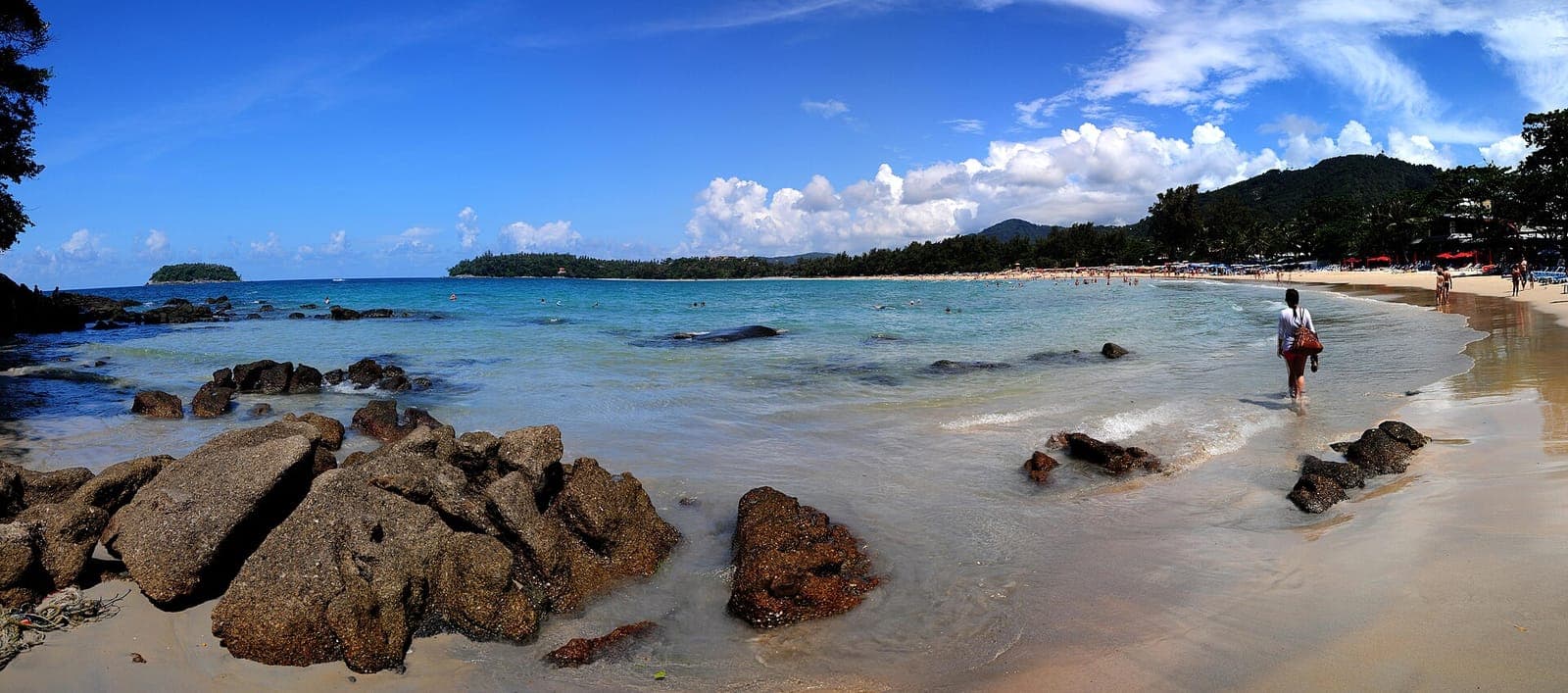
Phuket is Thailand's largest island and its busiest beach destination, joined to the mainland by a short bridge at its northern tip. It has an international airport, a ferry port, a Sino-Portuguese old town and a west coast of beaches with very different characters. It is also big, around 50 km from north to south with hills in between, so where you stay shapes your trip. This guide covers how to arrive, how to get around without overpaying, which area suits which traveller, and what to double-check before you go.
Why go
Families and first-timers get sheltered bays, easy infrastructure and plenty of English spoken. Travellers after nightlife and a wide choice of restaurants head for Patong; those who prefer quieter sand go north to Bang Tao and Surin or south to Nai Harn and Rawai. Phuket Town offers street food, coffee shops in restored shophouses and a Sunday walking street, and suits anyone not primarily here for the beach. The island is also the main launch point for boat trips to Phang Nga Bay and the Phi Phi islands, and pairs naturally with Krabi on the mainland opposite.
Getting there
By air
Phuket International Airport (HKT), operated by Airports of Thailand, sits at the northern end of the island, roughly 30 km from Phuket Town and about 40 km from Patong by road. Bangkok is the busiest link, with frequent flights from both Suvarnabhumi and Don Mueang on Thai Airways, Thai VietJet, AirAsia, Nok Air, Thai Lion Air and Bangkok Airways (about 1 hour 20 minutes in the air). Direct international flights arrive from Singapore, Kuala Lumpur, Hong Kong, China, India, Australia and Europe, with more routes in the November to March high season. Starting in Bangkok? See our Suvarnabhumi Airport to Bangkok guide for the city end.
Airport to your hotel
| Option | Serves | Approx. cost (THB, Oct 2026) | Notes |
|---|---|---|---|
| Phuket Smart Bus | Airport, Patong, Karon, Kata, Rawai and stops between | 100 flat | Roughly hourly; card, QR or cash on board; under-6s free |
| Airport Bus (city route) | Airport to Phuket Town | Under 100 | Roughly hourly from the arrivals exit |
| Airport Bus Express | Airport to Patong | Around 150–200 | Direct; check times on the operator's site or 12Go |
| Shared minivan | Patong, Kata, Karon | Around 150–250 per person | Leaves when full; may stop at a tour office first |
| Taxi / limousine counter | Anywhere on the island | Around 600–1,000 to west-coast beaches | Fixed fares posted inside arrivals; depends on zone and vehicle |
| Ride-hailing app (Grab, Bolt) | Anywhere | Similar to taxi, varies with demand | Airport pick-up rules have changed over time; check the app for the pick-up point |
The Smart Bus is the option we would point most independent travellers to. It stops near the exit of the domestic terminal, runs down the west coast through Patong, Karon and Kata to Rawai, and charges a flat 100 THB per ride whatever the distance, paid by tapping a Visa, Mastercard or JCB card (Apple Pay and Google Pay work too), by Thai QR payment, or in cash. The operator publishes a timetable and a live GPS tracker and warns that times are approximate because of traffic; allow 1.5 to 2 hours to Kata or Rawai. All prices above are approximate and must be confirmed; the fare board at the official taxi counter is the reference for taxis.
By ferry and by road
Phuket's main passenger port is Rassada Pier on the east side of Phuket Town. Ferries and speedboats run from here to the Phi Phi islands and to Krabi (Klong Jilad Pier), with most departures in the morning and the crossing to either taking roughly 2 hours; fares in October 2026 are typically around 500–1,000 THB depending on the operator and whether a hotel pick-up is included. Buses and minivans link Phuket with Krabi, Surat Thani and Bangkok from Bus Terminal 2 north of Phuket Town. We compare every Phuket–Krabi option in our Phuket to Krabi guide.
Getting around
Phuket has no rail or metro and public transport is thin by Bangkok standards, so most visitors mix the following.
- Phuket Smart Bus. Besides the airport route, a second line runs between Bus Terminal 2, Phuket Town and Patong for a flat 50 THB, and a free "Dragon Line" shuttle loops around Old Town, Central Festival and the OTOP market.
- Blue songthaews. Open-sided local buses leave the Ranong Road market in Phuket Town for Patong, Karon, Kata, Kamala, Surin, Bang Tao, Rawai, Nai Harn and Chalong, roughly every half hour from early morning to late afternoon, for about 30–50 THB. They do not run between beaches, so Patong to Kata means going via town.
- Ride-hailing apps. Grab and Bolt both operate on Phuket and are the simplest way to get a fixed price without negotiating. Expect higher fares and longer waits in Patong on busy evenings.
- Tuk-tuks and taxis. Phuket's red tuk-tuks and most taxis quote fixed prices by zone rather than using a meter. Agree the price before you get in and expect 300–500 THB for short hops such as Patong to Karon.
- Motorbike rental. Cheap and everywhere, but the hills, rain and traffic make Phuket a risky place to ride. You need a valid motorcycle licence from home, generally with an International Driving Permit, for police checkpoints and for your insurance to recognise you; always wear a helmet. Rental shops may not ask for a licence, which does not make riding without one legal.
- Car hire. Worth considering for families or anyone staying in the north; companies have counters at the airport.
Areas to stay
- Patong. The main resort town: the widest choice of hotels, restaurants and bars, Bangla Road nightlife and the best transport links. Noisy and crowded. Good for first-timers who want everything on the doorstep.
- Kata and Karon. Two long bays just south of Patong with a more relaxed, family-friendly feel. Kata has the better restaurant scene; Karon is quieter. Both are on the Smart Bus route.
- Phuket Town. The island's real city: Sino-Portuguese shophouses, markets, coffee and street food, and the best-value rooms. No beach, but buses and songthaews link it to the coast, and Rassada Pier is close.
- Bang Tao and Surin. North of Patong: large resorts around the Laguna estate at Bang Tao, beach clubs and smarter dining at Surin. Quieter and pricier, with less public transport.
- Nai Harn and Rawai. The southern tip. Nai Harn is a pretty, sheltered bay popular with longer stays; Rawai is a fishing-village seafront with a seafood market and boats to the small islands offshore. The Smart Bus ends here.
- Mai Khao and Nai Yang. Long, almost empty beaches inside Sirinat National Park next to the airport. Ideal for a first or last night.
Typical nightly rates in October 2026 run from around 600–1,200 THB for a simple guesthouse to 2,500–6,000 THB for a mid-range beach hotel, and much more at the Bang Tao resorts; prices rise sharply over Christmas and New Year.
Top sights and experiences
- Old Phuket Town. Walk Thalang, Dibuk, Yaowarat and Soi Romanee to see restored shophouses, Chinese shrines and the Thai Hua Museum. On Sunday evenings, usually around 16:00 to 22:00, Thalang Road closes to traffic for the Lard Yai walking street market.
- Big Buddha. The 45-metre white marble Buddha on Nakkerd Hill above Chalong has views over Kata, Karon and Chalong Bay. Entry is free, shoulders and knees must be covered (sarongs are lent at the entrance), and it is generally open from early morning to early evening; confirm times locally before a sunset visit, as there is no public transport up the hill.
- The west-coast beaches. Patong for activity, Kata and Karon for long sand and sunsets, Kamala and Surin for a calmer day, Nai Harn for scenery, Mai Khao for space and aircraft landing overhead.
- Phang Nga Bay. Limestone karsts, sea caves and the stilted village of Ko Panyi make a full-day trip by longtail, speedboat or sea kayak, usually with a stop at the "James Bond Island" of Khao Phing Kan. Tours pick up from most Phuket hotels.
- Phi Phi and the islands. Speedboat day trips to Phi Phi, Maya Bay and the Racha islands sell everywhere; slower ferries from Rassada Pier suit those staying overnight on Phi Phi. Maya Bay has had seasonal closures and visitor limits in recent years, so check the current rules before booking.
- Sirinat National Park. Covers Mai Khao, Nai Yang and Nai Thon beaches and the mangroves behind them, either side of the airport. Foreign visitors pay a park entrance fee (around 200 THB for adults in 2026) and the park is open in daylight hours.
- Wat Chalong and Promthep Cape. Phuket's most important temple and the southern sunset viewpoint, often combined with Big Buddha in a half-day island tour.
Practical notes
- Seasons. The dry season runs from roughly November to April, with the calmest seas and highest prices from mid-December to February. The southwest monsoon brings rain and rough seas from around May to October; it rarely rains all day and hotel prices drop, but boat trips are more often cancelled and some beaches become unsafe for swimming.
- Sea safety. During the monsoon, rip currents form on the west-coast beaches, Patong, Karon, Kata and Surin included, and people drown every year. Lifeguards fly red flags where swimming is prohibited and mark safe zones with red-and-yellow flags: stay between the yellow flags, never enter the water under a red flag, and keep children in sight. The Thai Meteorological Department publishes forecasts and marine warnings in English.
- Money. ATMs are everywhere; Thai banks charge around 220 THB per withdrawal on foreign cards, so take larger amounts less often. Cards work in hotels and larger restaurants, but tuk-tuks, songthaews, markets and beach vendors are cash only.
- SIM and data. Local SIMs from AIS, TrueMove H and dtac are sold in the arrivals hall and at convenience stores; a tourist SIM with a week or two of data typically costs a few hundred baht. eSIMs are an alternative.
- Health and safety basics. Phuket has good private hospitals in Patong and Phuket Town. Use mosquito repellent and treat road traffic as the biggest hazard on the island.
How long to stay
Three nights is enough for one beach base plus a day in Old Town or a boat trip. Five to seven nights lets you combine two areas, say Kata and Phuket Town, with a Phang Nga Bay day and a Phi Phi day. If Phuket is one stop on a longer route, our Thailand in 7 days itinerary shows how it fits with Bangkok and the north, and our Thailand travel essentials covers the basics for the whole trip. Most travellers with more than a week continue by ferry or minivan to Krabi.
Where to check and book
Links marked “partner link” go to 12Go, which may pay Thai Route Guide a commission if you book there. The price is the same for you. Other links are plain links.
Sources and when we checked
We checked the following sources when writing this guide. Timetables, prices and rules change; confirm with the operator before you travel.
- Airports of Thailand – Phuket International Airport ↗ (opens in a new tab)(checked 29 October 2026)
- Phuket Smart Bus – timetable ↗ (opens in a new tab)(checked 29 October 2026)
- Phuket Smart Bus – fares and payment ↗ (opens in a new tab)(checked 29 October 2026)
- Thai National Parks – Sirinat National Park ↗ (opens in a new tab)(checked 29 October 2026)
- Direct Ferries – Phuket (Rassada Pier) to Krabi (Klong Jilad Pier) ↗ (opens in a new tab)(checked 29 October 2026)
- Phuket 101 – How to ride the Phuket bus ↗ (opens in a new tab)(checked 29 October 2026)
- Phuket 101 – Phuket blue bus (songthaew) ↗ (opens in a new tab)(checked 29 October 2026)
- Thai Meteorological Department ↗ (opens in a new tab)(checked 29 October 2026)
- Grab Thailand ↗ (opens in a new tab)(checked 29 October 2026)
- 12Go ↗ (opens in a new tab)(checked 29 October 2026)
Thai Route Guide is an independent information site operated by IMPADX. We do not sell tickets, accommodation or tours. Links go to the operator or a third-party platform; bookings are made with them under their terms.
Related guides
View all →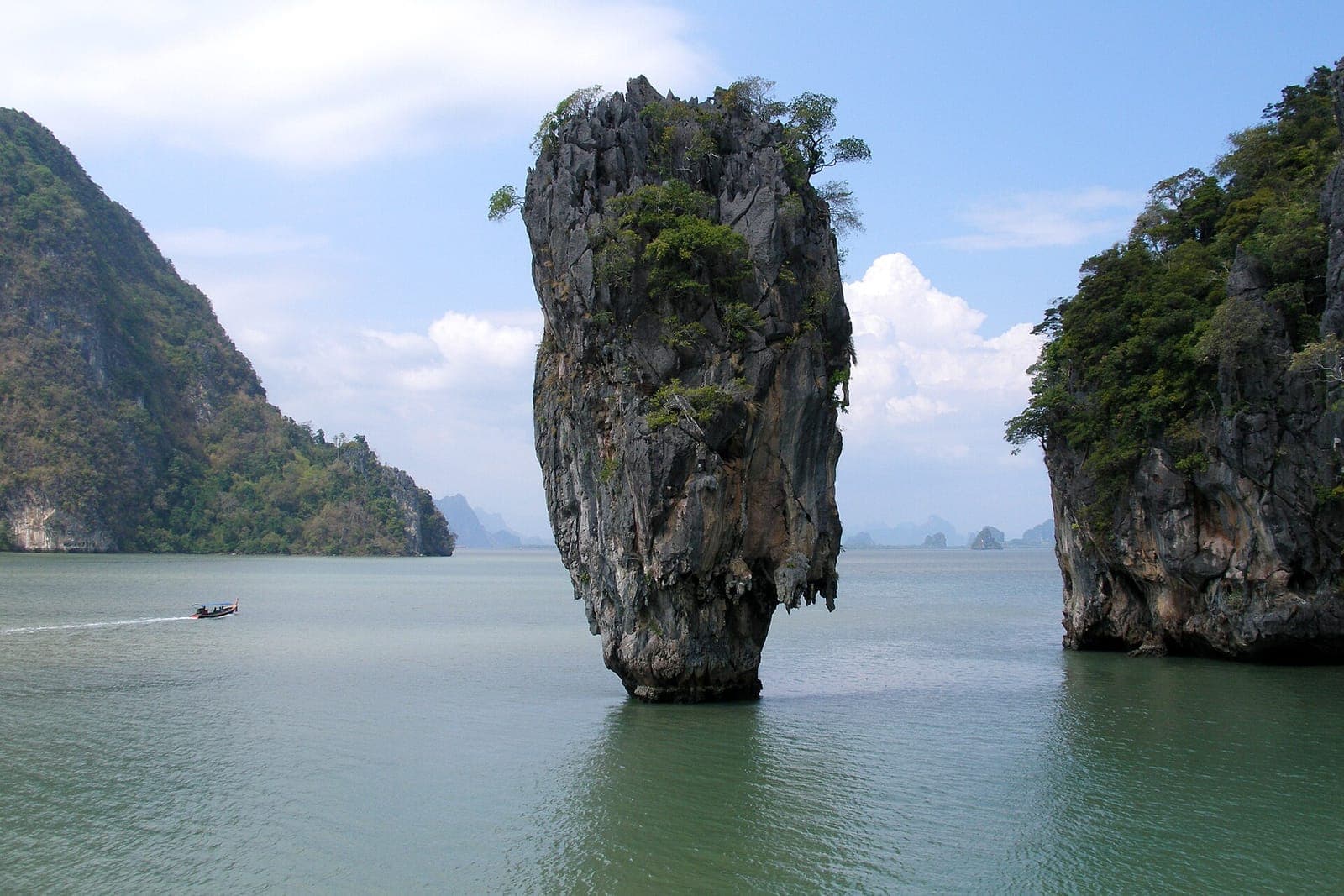
Transport
Phuket to Krabi: bus, minivan, ferry or private transfer?
Compare public buses, shared minivans, Rassada Pier ferries to Railay and Ao Nang, and private taxis for the 165 km Phuket to Krabi trip, with prices.
Updated 29 October 2026
Destinations
Krabi travel guide: Ao Nang, Railay, Koh Lanta and beyond
Practical guide to Krabi province: flying in, airport buses, longtail boats to Railay, Koh Lanta transfers, where to stay, top sights and monsoon-season notes.
Updated 29 October 2026
Itineraries
Thailand in 7 days: Bangkok, Chiang Mai and the beach
A one-week Thailand itinerary for first-timers: 2 nights in Bangkok, 2 in Chiang Mai and 3 on the Andaman coast, with flight, train and airport logistics.
Updated 29 October 2026
Travel Tips
Thailand travel essentials: what to sort out before your first trip
The Digital Arrival Card, baht and ATM fees, tourist SIMs, apps, etiquette, seasons, emergency numbers, plugs and tipping: the basics for a first Thailand trip.
Updated 29 October 2026