Thailand travel essentials: what to sort out before your first trip
The Digital Arrival Card, baht and ATM fees, tourist SIMs, apps, etiquette, seasons, emergency numbers, plugs and tipping: the basics for a first Thailand trip.
On this page
- Before you go
- Entry requirements
- Thailand Digital Arrival Card (TDAC)
- Travel insurance
- Money: the baht, cash and cards
- ATMs and withdrawal fees
- Staying connected: SIM and eSIM
- Apps worth installing
- Etiquette and the law
- Weather and seasons by region
- Health and safety
- Emergency numbers
- Scams to be aware of
- Electricity and plugs
- Tipping
- Where to check
- Summary checklist
Thailand is an easy country to travel in once you know a handful of basics: how entry paperwork works, how to get cash without paying over the odds, which SIM to buy, what to wear at a temple and who to call if something goes wrong. This guide collects those essentials with links to official sources. Prices are approximate, as of October 2026, and should be checked before you rely on them.
Before you go
Entry requirements
Entry rules depend on your passport, your reason for visiting and how long you stay, and they change. We do not give nationality-specific advice: check the current requirements for your passport with the Thai embassy or consulate in your country before you book anything non-refundable, and make sure your passport is valid well beyond your planned stay.
Thailand Digital Arrival Card (TDAC)
Since 1 May 2025 Thailand has replaced the paper arrival card with an online form, the Thailand Digital Arrival Card (TDAC). The official portal is tdac.immigration.go.th, run by the Immigration Bureau, and it states that there are no fees. According to the Royal Thai Embassy announcement of the scheme, it applies to all travellers regardless of passport category and must be submitted within three days before arrival. Fill it in once you have your flight and first hotel details, and keep the confirmation on your phone for immigration.
Travel insurance
Thai hospitals generally require a guarantee of payment before treatment. Buy insurance that covers medical treatment and evacuation, and read the exclusions: riding a motorbike without a valid licence, scuba diving and some adventure activities are often excluded or need an add-on.
Money: the baht, cash and cards
Thailand's currency is the baht (THB). Banknotes in everyday use are 20, 50, 100, 500 and 1,000 baht; the Bank of Thailand issues the 20, 50 and 100 baht notes of the current series in polymer. Coins come in 1, 2, 5 and 10 baht, plus small satang coins you will mostly see in supermarket change.
Hotels, malls, chain restaurants and larger shops take cards. Markets, street food, taxis, tuk-tuks, songthaews, small guesthouses and many island businesses still run on cash, so carry some baht at all times. Thai QR payments (PromptPay) are everywhere but tied to Thai bank accounts, so most visitors cannot use them.
ATMs and withdrawal fees
ATMs are widespread and accept most international Visa and Mastercard cards. The catch is the fee: Thai banks charge a flat fee per withdrawal on foreign cards, commonly around 220 THB, with some machines now showing higher amounts. The fee appears on screen before you confirm, so read it and cancel if it is unexpectedly high; your own bank may add a charge on top. Withdraw larger amounts less often, and if the machine offers to convert the transaction to your home currency, decline and choose baht: the conversion rate offered is almost always worse.
Changing clean, undamaged foreign notes at a bank or licensed exchange booth in the city usually beats the airport rate. Counters will ask to see your passport.
Staying connected: SIM and eSIM
Thailand has two large mobile operators for visitors, AIS and True (which has absorbed dtac and markets as True-dtac). Both sell tourist packages with unlimited data, both have counters in the arrivals halls of the international airports, and both support eSIM so you can set up before you land.
| Operator | Example tourist plans (Oct 2026, from operator sites) | Where to buy |
|---|---|---|
| AIS | 5 days around 399 THB, 8 days around 499 THB, 15 days around 699 THB, 30 days around 1,199 THB; unlimited data plus free calls within AIS | AIS shops (airports included), eSIM online |
| True-dtac | Tourist INFINITE unlimited data from about 449 THB for 8 days; 15- and 30-day versions and a 10-day data-only SIM also listed | Airport counters (24 hours), True-dtac centres, online store, eSIM partners |
Prices change with promotions and differ by sales channel, so confirm on the operator's page or at the counter. Points that apply to both:
- Registration is compulsory. Thai regulations require every SIM to be registered to a passport. Airport staff do this for you; if you buy a pack elsewhere, you scan a QR code, photograph your passport and take a selfie.
- Tourist SIMs are capped at 60 days. To keep a number longer you must re-verify your identity with the operator.
- International eSIM resellers are convenient but usually data-only, so you will have no Thai number for hotel or driver calls.
Apps worth installing
- Grab – ride-hailing (cars, taxis and motorbike taxis) and food delivery, with the fare shown up front.
- Bolt – a second ride-hailing option in Bangkok and some other cities, useful when Grab prices surge.
- Google Maps – navigation plus BTS, MRT and bus directions in Bangkok; download offline maps for each city.
- LINE – Thailand's dominant messaging app; hotels, tour operators and drivers often ask for your LINE ID.
- 12Go – compare and book trains, buses, ferries and transfers between cities.
- Klook – tours, attraction tickets, airport transfers and eSIMs.
- Bangkok transit – the Bangkok MRT app from BEM covers the Blue and Purple lines, and BTS publishes routes and fares online. See our guide to getting around Bangkok.
Etiquette and the law
- Temples: cover shoulders and knees, take off shoes before entering a building with a Buddha image, do not point your feet at images or monks, and never climb on structures for photos. Women should not touch monks. Carry a light scarf or sarong; the Grand Palace in Bangkok enforces its dress code strictly.
- The monarchy: Thailand has lèse-majesté laws under which criticising or insulting the monarchy is a criminal offence with heavy penalties, applied to foreigners and to online content. Treat the royal family with respect in conversation and on social media, and stand when the royal anthem is played before films and in public places.
- Head and feet: the head is considered the highest part of the body and the feet the lowest. Avoid touching anyone's head, and do not use your feet to point, push doors or rest on seats.
- Keep your cool: raised voices and visible anger mean a loss of face for everyone involved and rarely get a better result.
- Smoking, vaping and drugs: e-cigarettes and vapes are illegal in Thailand, including for tourists; smoking is banned in many public places; drug penalties are severe and recreational cannabis use is not permitted.
Weather and seasons by region
Thai government sources describe three seasons for most of the country: a hot season from roughly mid-February to mid-May (April is usually the hottest month), a rainy season from mid-May to mid-October driven by the south-west monsoon, with August and September the wettest months, and a cool season from mid-October to mid-February, when the north can be pleasantly cool in December and January. The south is the exception, and its two coasts differ:
| Region | Driest, most settled months | Wettest months |
|---|---|---|
| Bangkok and central plains | November to February | August to October |
| North (Chiang Mai, Chiang Rai) | November to February; March to April is hot with seasonal haze | August to September |
| Andaman coast (Phuket, Krabi, Khao Lak) | November to April | May to October, peaking around September and October |
| Gulf coast (Koh Samui, Koh Phangan, Koh Tao) | January to August | October to December, with November usually the wettest month |
Rainy season rarely means all-day rain: most days bring a heavy downpour of an hour or two. It does mean Andaman ferries can be cancelled in rough weather, so build slack into island itineraries. The Thai Meteorological Department publishes forecasts and warnings in English.
Health and safety
- Tap water: do not drink it. Bottled and filtered water is cheap and everywhere; ice in restaurants is generally made from purified water.
- Street food is usually safe when it is cooked fresh in front of you and the stall is busy; be more cautious with food that has been sitting out.
- Mosquitoes: dengue is present year-round with a rainy-season peak. Use repellent at dawn and dusk and wear long sleeves in the evening; ask a travel-health professional about malaria for rural border areas.
- Roads: motorcycle accidents are the main cause of serious injury to visitors. If you rent a scooter, wear a helmet, hold a valid motorcycle licence and confirm your insurance applies.
- Beaches: red flags mean do not swim; Andaman rip currents in monsoon season cause drownings every year.
Emergency numbers
| Number | Service |
|---|---|
| 1669 | Medical emergency and ambulance (National Institute for Emergency Medicine) |
| 1155 | Tourist Police hotline, with English-speaking staff |
| 191 | Police |
| 199 | Fire |
| 1182 | Thai Meteorological Department call centre |
The Tourist Police are the first stop for lost property, disputes with businesses and police reports for insurers.
Scams to be aware of
Thailand is not a dangerous country for visitors, but a few well-worn tricks catch first-timers.
- "It's closed today": a friendly stranger near a major sight says it is closed and offers a tuk-tuk tour that ends at a gem shop or tailor. Check the entrance yourself.
- Unmetered taxis and tuk-tuks: ask for the meter, or use Grab or Bolt so the fare is fixed; agree a tuk-tuk price before you get in.
- Jet-ski and motorbike damage claims: photograph the vehicle before you take it, never leave your passport as a deposit, and rent from established operators.
- Card skimming: prefer ATMs attached to bank branches and cover the keypad.
- Drink spiking and methanol: do not leave drinks unattended, and avoid cheap spirits of uncertain origin; methanol poisoning has caused deaths.
Electricity and plugs
Thailand runs on 230 V, 50 Hz. The official socket standards are type C (two round pins) and the Thai type O (three round pins), but nearly all sockets are hybrids that also take flat-pin types A and B, so most two-pin chargers fit without an adapter. Bring a universal adapter for UK-style three-pin plugs, and check that any device from a 110 V country is dual voltage.
Tipping
Tipping is not expected in the way it is in North America, but it is appreciated.
- Restaurants: round up or leave small change at casual places; around 10 per cent at a nicer restaurant if a service charge is not already added (many mid-range and upmarket places add 10 per cent).
- Taxis and Grab: not expected; rounding up to the nearest 10 or 20 THB is a kind gesture.
- Massage and spa: 50 to 100 THB per hour of treatment.
- Hotel porters and housekeeping: 20 to 50 THB.
- Guides and drivers: a few hundred baht for a full day with a guide, somewhat less for a driver.
Street-food vendors and market stalls do not expect tips.
Where to check
Links marked “partner link” go to 12Go, which may pay Thai Route Guide a commission if you book there. The price is the same for you. Other links are plain links.
Summary checklist
- Passport valid well beyond your stay; entry rules checked for your nationality
- TDAC submitted on tdac.immigration.go.th (free) within three days before arrival; confirmation saved
- Travel insurance bought, with cover for any diving or scooter plans
- Bank notified and its foreign ATM fees checked; some baht or clean foreign notes for the first day
- Seasons checked for each region, especially if combining the Andaman and Gulf coasts
- eSIM pre-installed or airport SIM counter planned
- Grab, Google Maps (offline city maps), LINE and 12Go installed
- Light scarf or sarong and shoes that slip off easily for temples
- Mosquito repellent, sunscreen and a refillable water bottle
- Universal plug adapter; devices checked for 230 V
- Emergency numbers saved: 1669 medical, 1155 Tourist Police, 191 police
For the rest of your planning, see our 7-day Thailand itinerary, the Bangkok destination guide and the guide to getting from Suvarnabhumi Airport into Bangkok.
Sources and when we checked
We checked the following sources when writing this guide. Timetables, prices and rules change; confirm with the operator before you travel.
- Thailand Digital Arrival Card (TDAC) – Immigration Bureau ↗ (opens in a new tab)(checked 29 October 2026)
- Royal Thai Embassy, Kuala Lumpur – Official announcement: TDAC new entry requirement ↗ (opens in a new tab)(checked 29 October 2026)
- Tourist Police Bureau – hotline 1155 ↗ (opens in a new tab)(checked 29 October 2026)
- UK FCDO Thailand travel advice – safety and security ↗ (opens in a new tab)(checked 29 October 2026)
- UK FCDO Thailand travel advice – health ↗ (opens in a new tab)(checked 29 October 2026)
- Land Development Department – Seasons of Thailand ↗ (opens in a new tab)(checked 29 October 2026)
- Thai Meteorological Department (English) ↗ (opens in a new tab)(checked 29 October 2026)
- AIS – SIM for Tourist plans ↗ (opens in a new tab)(checked 29 October 2026)
- True-dtac – Tourist SIM and eSIM ↗ (opens in a new tab)(checked 29 October 2026)
- Bank of Thailand – current series of banknotes ↗ (opens in a new tab)(checked 29 October 2026)
Thai Route Guide is an independent information site operated by IMPADX. We do not sell tickets, accommodation or tours. Links go to the operator or a third-party platform; bookings are made with them under their terms.
Related guides
View all →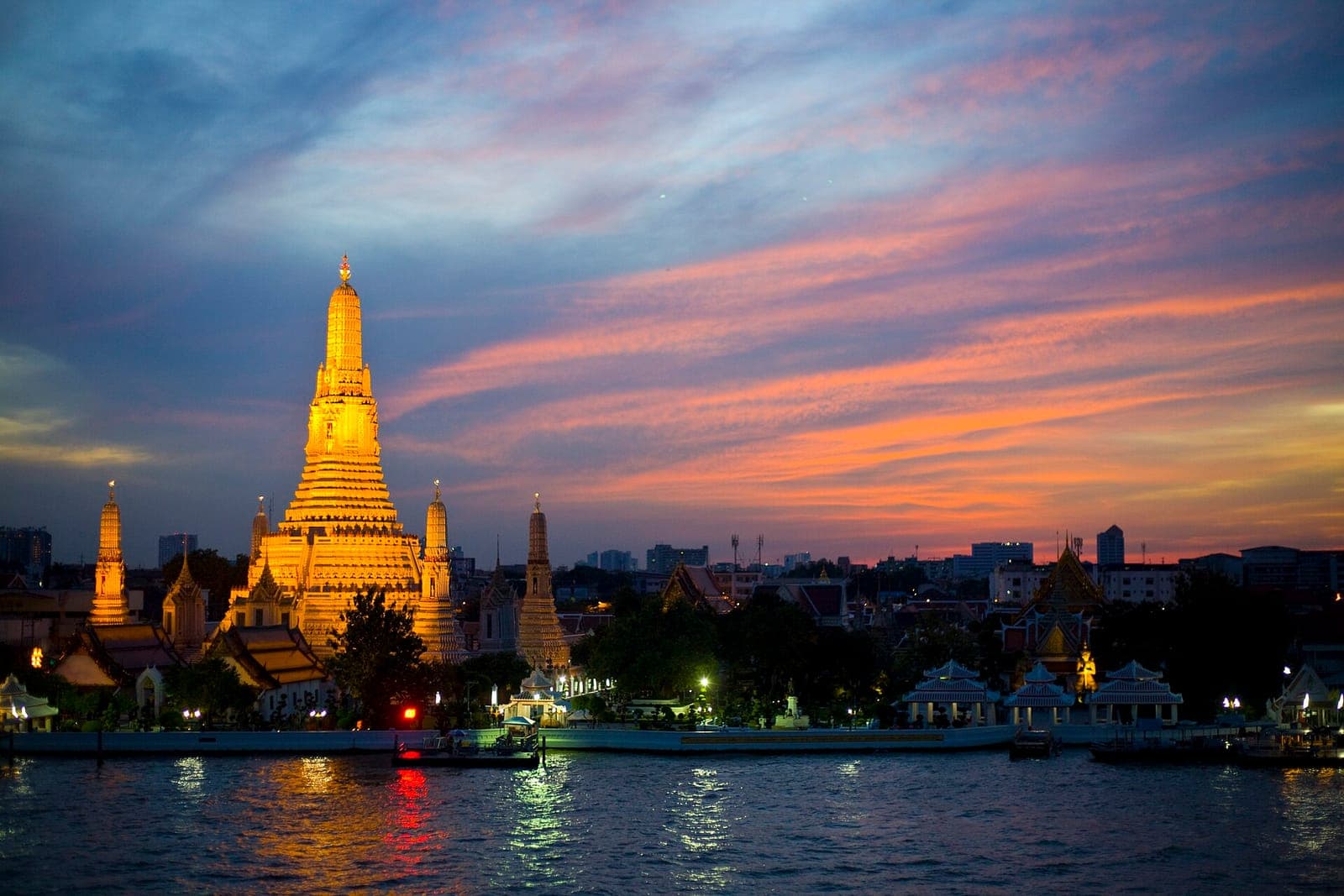
Destinations
Bangkok travel guide: getting there, getting around and what to see
Practical Bangkok guide for first-time and repeat visitors: both airports, BTS, MRT, boats and taxis, main sights, where to stay and what to check before going.
Updated 29 October 2026
Travel Tips
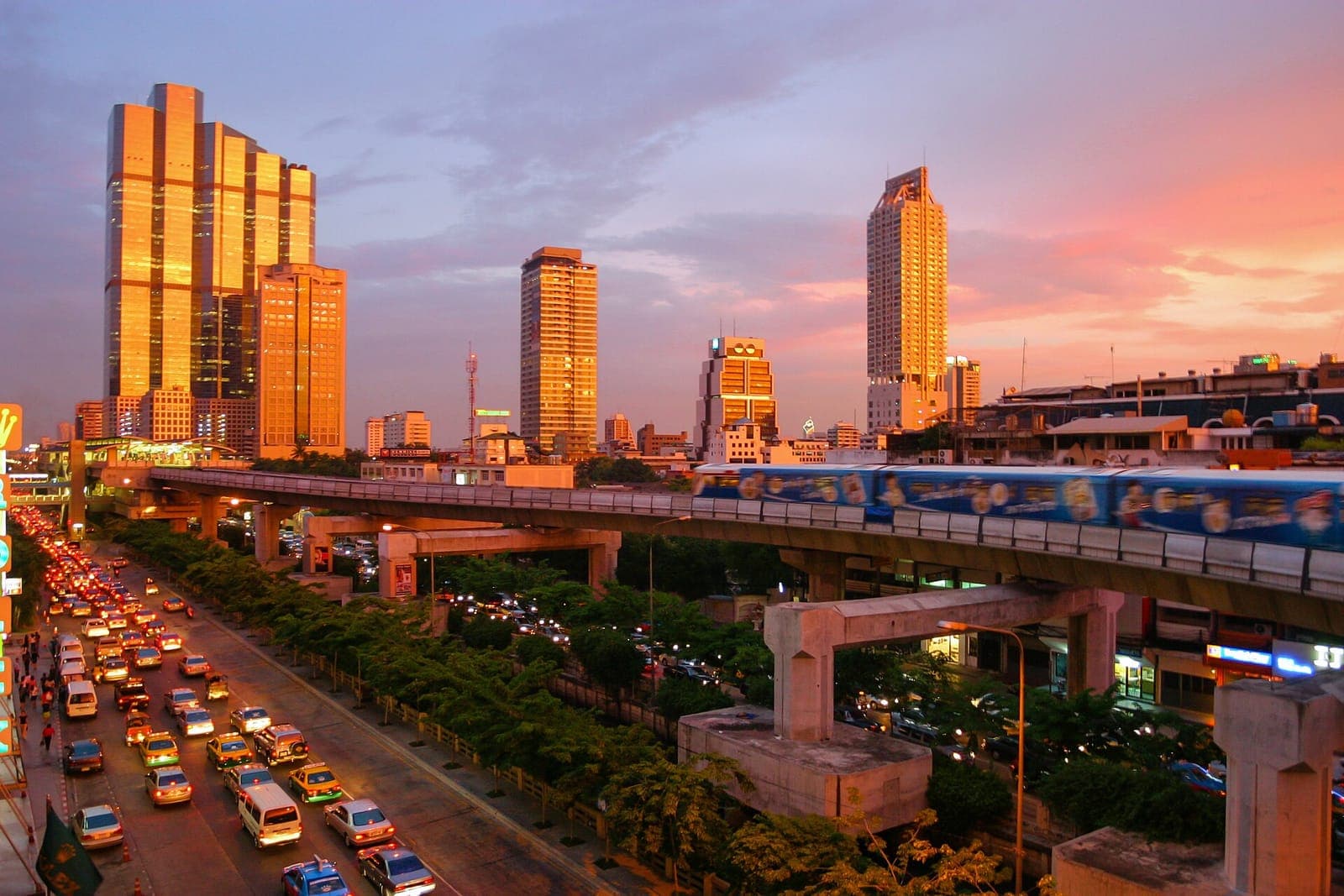
Getting around Bangkok: BTS, MRT, boats, taxis and apps
How Bangkok's BTS, MRT, Airport Rail Link, Red Lines, buses, river and canal boats, taxis, Grab, tuk-tuks and motorbike taxis work: fares, hours and tips.
Updated 29 October 2026
Itineraries
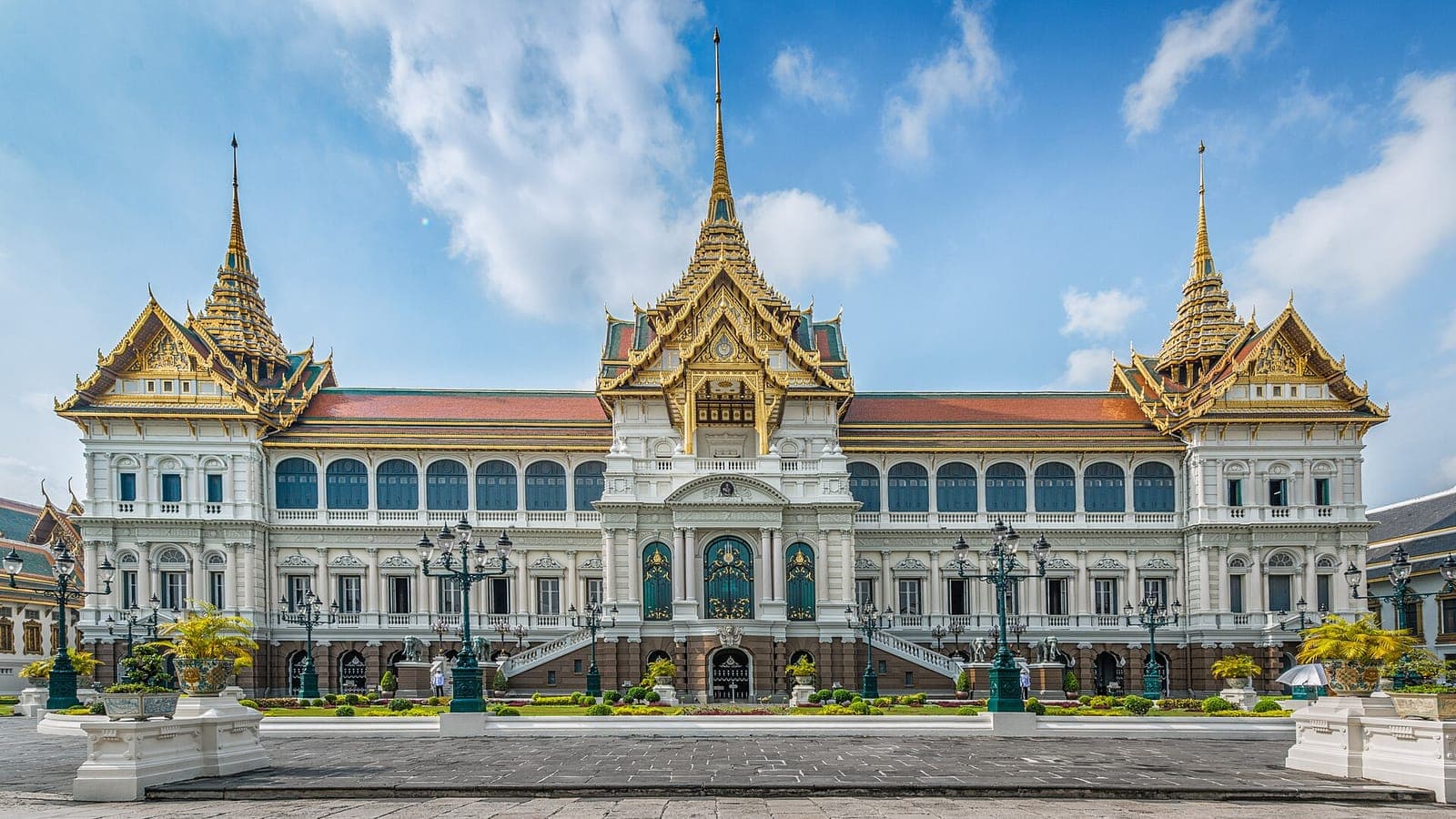
Thailand in 7 days: Bangkok, Chiang Mai and the beach
A one-week Thailand itinerary for first-timers: 2 nights in Bangkok, 2 in Chiang Mai and 3 on the Andaman coast, with flight, train and airport logistics.
Updated 29 October 2026
Transport
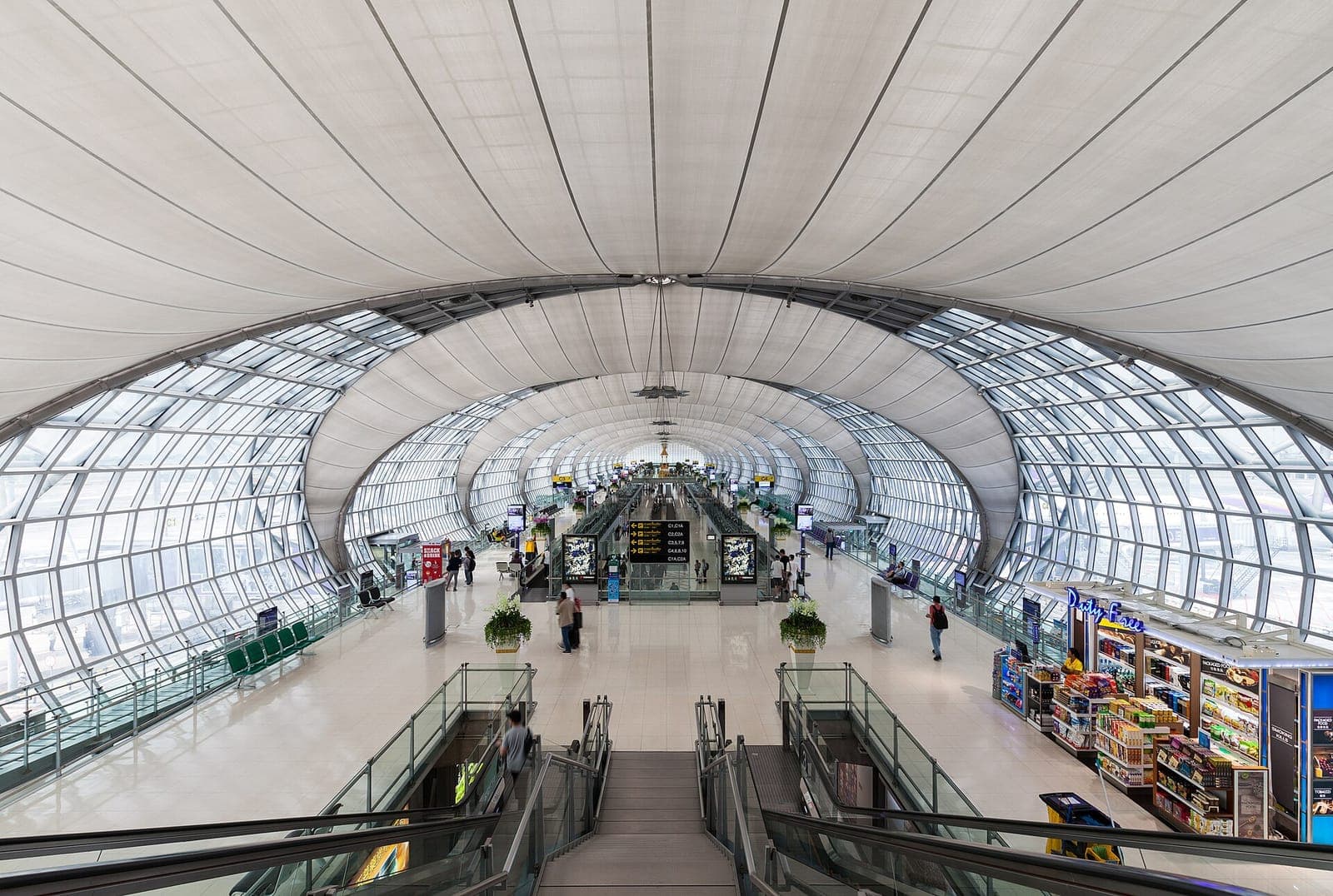
Suvarnabhumi Airport to Bangkok: rail link, taxi, bus or transfer?
How to get from Suvarnabhumi Airport into Bangkok: Airport Rail Link, the taxi queue, Grab and Bolt, the S1 bus, limousines and transfers, with costs by area.
Updated 29 October 2026