Bangkok travel guide: getting there, getting around and what to see
Practical Bangkok guide for first-time and repeat visitors: both airports, BTS, MRT, boats and taxis, main sights, where to stay and what to check before going.
- Region
- Central Thailand
On this page
- Why go
- Getting there
- Suvarnabhumi Airport (BKK)
- Don Mueang Airport (DMK)
- Arriving by train or bus
- Getting around
- Where to stay
- Top sights and experiences
- Grand Palace and Wat Phra Kaew
- Wat Pho
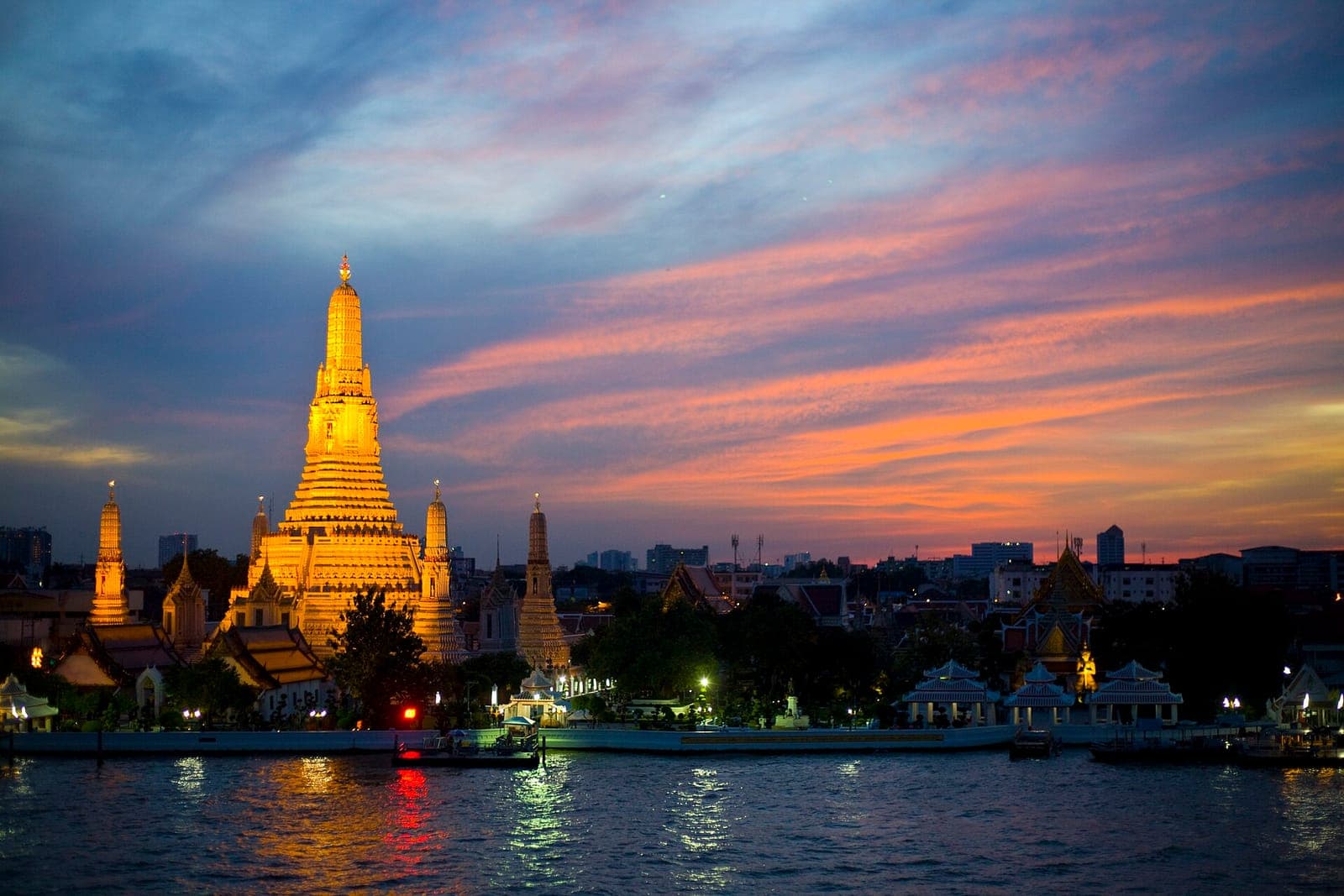
- Wat Arun
- Yaowarat (Chinatown)
- Chatuchak Weekend Market
- Jim Thompson House
- River and canal boats
- Day trip to Ayutthaya
- Practical notes
- How long to stay
- Where to check and book
- Do I need a Rabbit card?
Bangkok is the capital of Thailand and the hub of the national rail, bus and flight network. This guide covers the practical side of a visit – how to arrive, how to move around, which sights are worth the entry fee and what to double-check before you fly – as of October 2026. Prices change, so treat every figure as a guide and confirm with the operator.
Why go
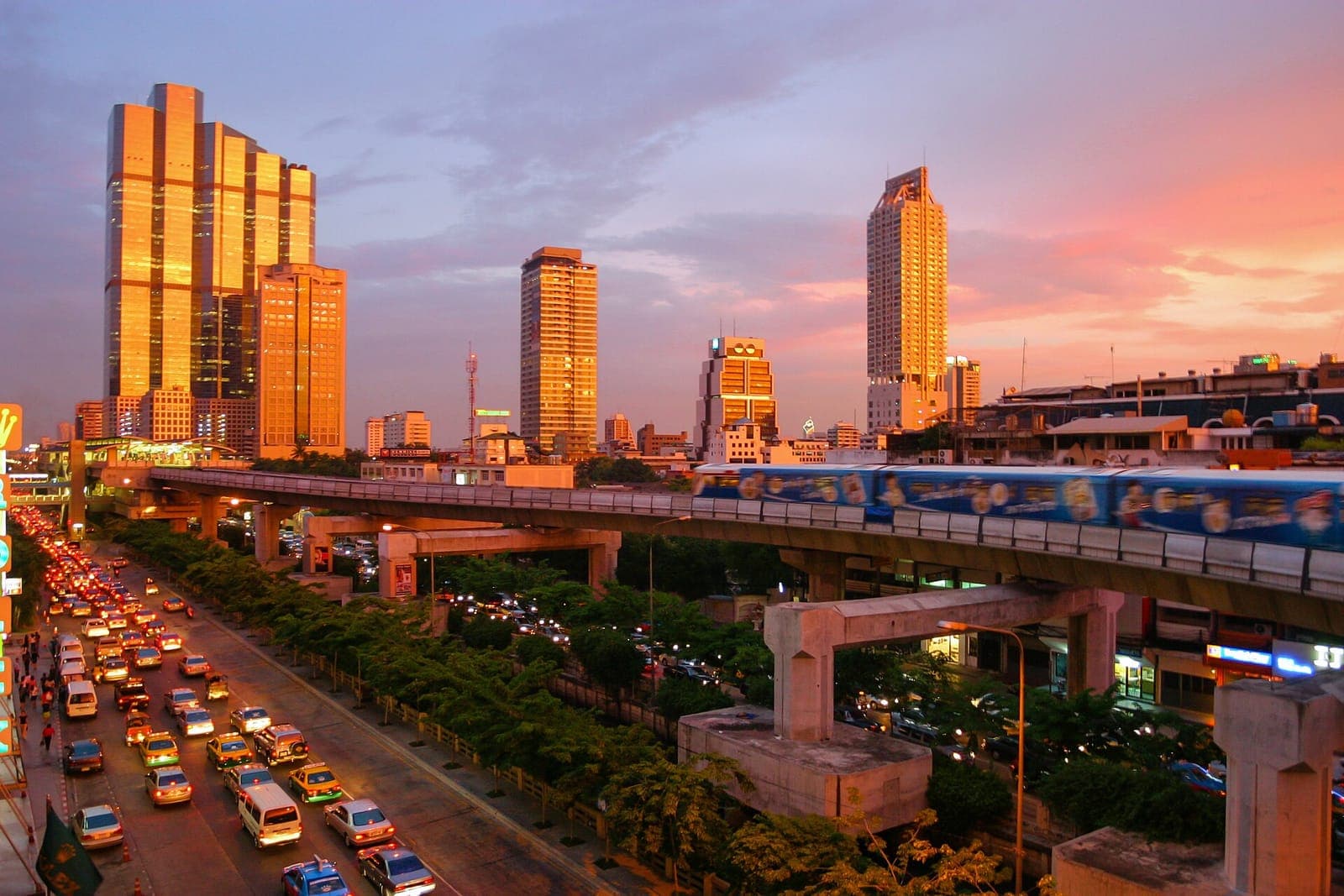
Bangkok is a destination in its own right, not just a transit stop. The Rattanakosin old town holds the Grand Palace, Wat Pho and, across the river, Wat Arun, all within a short walk or boat hop of each other. Yaowarat (Chinatown) is one of Asia's great evening food streets, Chatuchak Weekend Market has thousands of stalls, and the river and canals show you the city from the water. Because the BTS and MRT now reach most places a visitor wants to go, the famous traffic matters far less than it did a decade ago.
Getting there
Bangkok has two international airports, and it matters which one your flight uses.
Suvarnabhumi Airport (BKK)
Suvarnabhumi, about 30 km east of the centre, handles most full-service international flights plus many domestic ones. The Main Terminal Building is linked to the newer SAT-1 concourse by an automated people-mover, so allow extra time if your gate is there; Airports of Thailand recommends arriving at least two hours before departure. The Airport Rail Link station is in the basement, public buses leave from the Public Transportation Centre (route S1 to Sanam Luang is about 60 THB) and the official metered-taxi queue is on level 1. We compare every option in our Suvarnabhumi Airport to Bangkok guide.
Don Mueang Airport (DMK)
Don Mueang, north of the centre, is the base for most low-cost carriers. Terminal 1 is international and Terminal 2 domestic. Options into town, per the airport's own transport page:
- Airport buses A1 and A2 (about 30 THB) to BTS Mo Chit / MRT Chatuchak Park, A1 continuing to the Mo Chit 2 bus terminal and A2 to Victory Monument; A3 (Pratunam, Lumphini) and A4 (Democracy Monument, Khao San) are about 50 THB.
- SRT Dark Red Line trains from Don Mueang station, linked to the terminal by walkway, to Krung Thep Aphiwat Central Terminal for the MRT Blue Line; line fares run 12–42 THB.
- Metered taxi from the official rank, with a 50 THB airport surcharge.
- A free shuttle bus to Suvarnabhumi for passengers holding an onward flight ticket (roughly 05:00 to midnight).
Arriving by train or bus
Long-distance trains terminate at Krung Thep Aphiwat Central Terminal, on the MRT Blue Line. Buses from the north arrive at Mo Chit (Bangkok Bus Terminal, Chatuchak), from the east coast at Ekkamai and from the south at Sai Tai Mai. See our route guides for Chiang Mai, Pattaya and Ayutthaya.
Getting around
Our getting around Bangkok article goes into detail; here is the short version.
| Mode | Typical fare (THB, Oct 2026) | Good for |
|---|---|---|
| BTS Skytrain | roughly 17–65 per trip | Sukhumvit, Silom, Siam, Chatuchak, Saphan Taksin for the river |
| MRT Blue Line | roughly 17–44 per trip | Old town (Sanam Chai), Chinatown (Wat Mangkon), Krung Thep Aphiwat |
| Airport Rail Link | 15–45 | Suvarnabhumi to Makkasan and Phaya Thai, about 26 minutes |
| Chao Phraya Express Boat | orange flag about 19 flat | Temples and old-town piers |
| Metered taxi | 35 flag fall, then about 6.50 per km | Door to door where trains do not reach |
| Grab / Bolt | app price shown up front | Late nights, groups, luggage |
BTS Skytrain. The Sukhumvit and Silom lines meet at Siam. Buy a single-journey card or one-day pass from the machines (coins, notes and Thai bank-app QR codes), or a Rabbit card, a stored-value card sold at ticket offices that saves queuing. As of mid-2026 BTS gates did not accept contactless bank cards; the operator says it is preparing for them, so check its site.
MRT. The Blue Line is the easiest way to reach the old town (Sanam Chai for Wat Pho) and Chinatown. Since 1 June 2026 the gates on the Blue and Purple lines take contactless Visa, Mastercard and UnionPay cards directly and old MRT stored-value cards are no longer accepted; single-journey tokens are still sold. Tap out with the same card you tapped in.
Fare schemes. The widely reported 20 THB flat fare was a pilot that has ended. A 40 THB daily cap applies on the SRT Red Line and MRT Purple Line when paying by contactless bank card, scheduled to run until 30 November 2026. A city-wide common ticket is planned for 2027 but not yet in place.
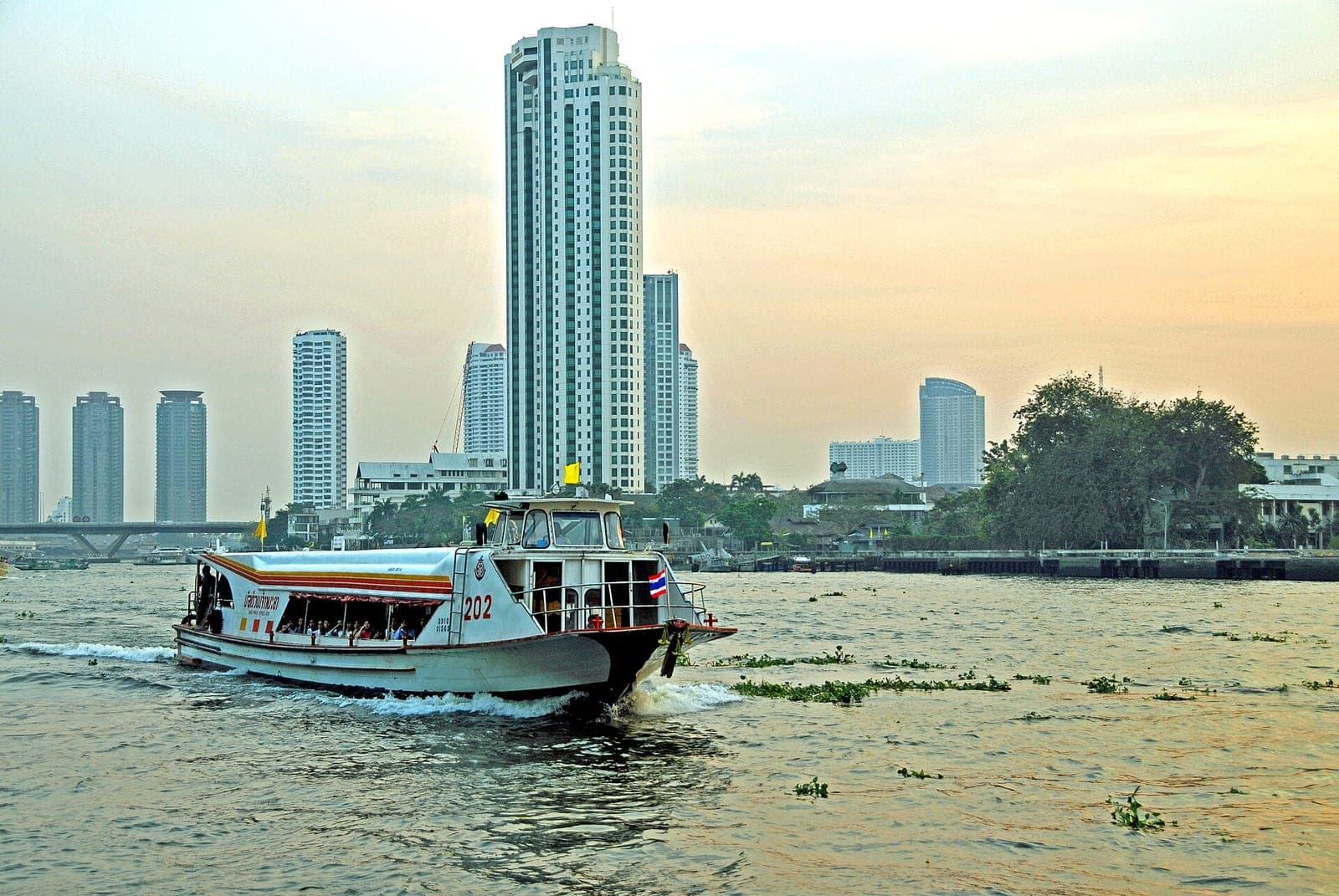
Boats. The Chao Phraya Express Boat runs from Sathorn pier (next to BTS Saphan Taksin) to old-town piers such as Tha Tien (Wat Pho), Tha Chang (Grand Palace) and Phra Arthit (Khao San). The operator lists the orange flag at a flat 19 THB and faster yellow and red flags at 24–33 THB, with full timetables on weekdays only, so check weekend frequencies. A blue-flag tourist boat sells single trips and a hop-on-hop-off day pass. Cross-river ferries connect Tha Tien with Wat Arun.
Taxis and apps. Metered taxis start at 35 THB, add about 6.50 THB per km for the first 10 km and 3 THB per minute in standing traffic; tolls are extra and a 50 THB surcharge applies from airport ranks. Insist on the meter; if a driver refuses, take the next cab. Grab and Bolt show the fare before you book, simplest late at night or with luggage. Tuk-tuk fares are negotiated and usually above taxi rates, so agree the price first.
Where to stay
Choose by transport first. Sukhumvit and Siam sit on the BTS and suit shopping and nightlife; Silom and Sathorn have both BTS and MRT and are close to the river pier; Riverside hotels are scenic but rely on boats and taxis; Rattanakosin and Khao San are walking distance from the big temples but further from rail. We break down each area, with price bands and downsides, in where to stay in Bangkok.
Top sights and experiences
Grand Palace and Wat Phra Kaew
The former royal residence and the Temple of the Emerald Buddha are Bangkok's most visited site. The official site lists it as open daily, with tickets sold 08:30–15:30 and the grounds closing at 16:30; the foreign-visitor ticket is 500 THB (free for Thai nationals and children under 120 cm) and includes the Queen Sirikit Museum of Textiles. Tickets can be bought online up to a month ahead (non-refundable) or at the gate. The dress code is enforced: no sleeveless tops, see-through fabric, shorts, torn or tight trousers or short skirts. Entry is via Mani Noppharat Gate; arrive at opening to beat the heat.
Wat Pho
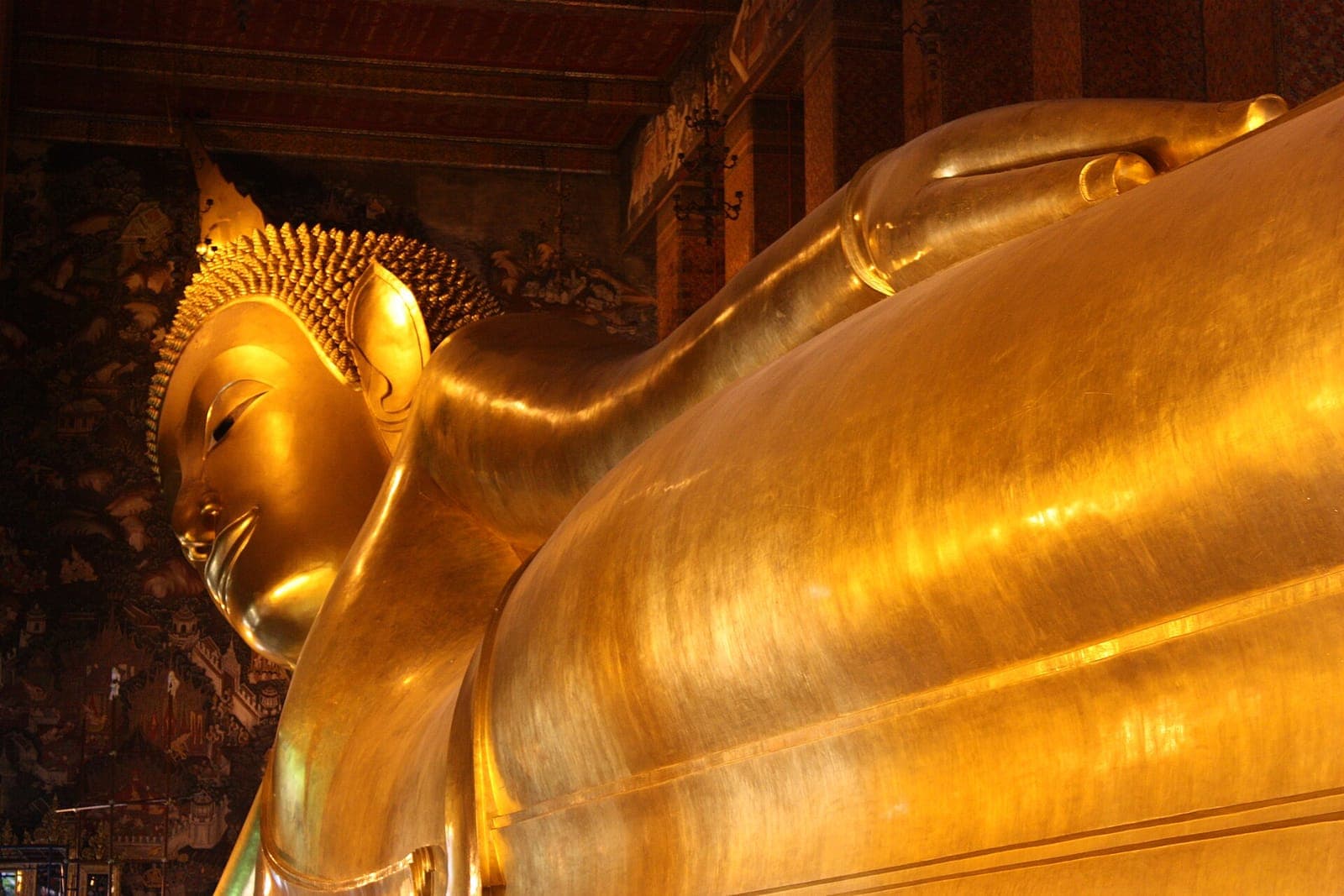
Ten minutes' walk south of the Grand Palace, Wat Pho holds the 46-metre Reclining Buddha and the country's best-known traditional massage school. The temple's site lists 08:00–19:30 and a 300 THB entry fee (children under 120 cm free), with massages from about 340 THB for 30 minutes. Shorts are not allowed. MRT Sanam Chai is the nearest station; Tha Tien is the pier.
Wat Arun
The Temple of Dawn stands across the river from Wat Pho, reached by the cross-river ferry from Tha Tien. The entry fee for foreigners was about 200 THB in 2026, with hours of roughly 08:00–18:00; shoulders and knees must be covered. The porcelain-covered spire is best photographed from the Wat Pho bank at sunset.
Yaowarat (Chinatown)
Come after dark, when Yaowarat Road fills with seafood grills, noodle stalls and dessert carts. MRT Wat Mangkon drops you in the middle of it.
Chatuchak Weekend Market
Thousands of stalls selling clothes, crafts, homeware, plants and food, open Saturdays and Sundays (roughly 09:00–18:00). Take the BTS to Mo Chit or the MRT to Chatuchak Park or Kamphaeng Phet. Go early, carry water and note your entrance gate.
Jim Thompson House
The teak house of the American silk entrepreneur who vanished in 1967 is a calm break from the city, a short walk from BTS National Stadium. Entry is by guided tour only; the museum lists 10:00–17:00 daily, 250 THB for adults and 150 THB for ages 10–21, and warns against unofficial sellers, so buy at the ticket office or on its own website.
River and canal boats
An orange-flag express boat from Sathorn to Phra Arthit is one of the best-value sightseeing trips in the city. For the canals, Khlong Saen Saep commuter boats cut across the centre from Pratunam, and long-tail boats can be chartered from the river piers for the Thonburi canals – agree price and duration first.
Day trip to Ayutthaya
The ruined former capital, 80 km north, is an easy day out by train from Krung Thep Aphiwat, by minivan from Mo Chit or with a tour. Our Bangkok to Ayutthaya guide compares the options.
Practical notes
Weather. November to February is the cool, dry season and the most comfortable time, with the biggest crowds and highest hotel rates. March to May is very hot. The rains usually run from around June to October, typically as short, heavy afternoon storms rather than all-day rain; sightseeing is still fine with a flexible plan.
Money. ATMs are everywhere; most charge foreign cards a fixed fee per withdrawal (commonly around 220 THB, sometimes more), so take out larger sums less often and decline the machine's own currency conversion. Cards work in hotels, malls and chain shops; street stalls, taxis and small restaurants want cash.
SIM cards and data. AIS, TrueMove H and dtac sell tourist SIM packages at both airports and in 7-Eleven shops; passport registration is required, and eSIMs can be bought online before you fly. Have data working on arrival for the Thailand Digital Arrival Card and ride-hailing apps.
Safety and scams. Bangkok is generally safe for visitors. The common annoyances are low-stakes: drivers refusing the meter, the "temple is closed" routine, gem and tailor "deals" and inflated prices on unlicensed boats. A polite no and walking on solves almost all of them. The 24-hour Tourist Police hotline is 1155.
Dress. Temples and the Grand Palace require covered shoulders and knees; carry a light scarf or long trousers and wear shoes you can slip off. For packing and etiquette basics see Thailand travel essentials, and check entry requirements for your passport with official Thai sources.
How long to stay
- Two days: old-town temples, then Chinatown in the evening; shopping, Jim Thompson House and a rooftop view on day two.
- Three days: add Chatuchak (on a weekend) or a canal trip; see our Bangkok in 3 days itinerary.
- Four or five days: add an Ayutthaya day trip and a slower pace. Bangkok also opens our Thailand in 7 days route.
Where to check and book
Links marked “partner link” go to 12Go, which may pay Thai Route Guide a commission if you book there. The price is the same for you. Other links are plain links.
Do I need a Rabbit card?
Not for a short visit. Single tickets work on the BTS and the MRT takes contactless bank cards. A Rabbit card is useful if you will ride the BTS many times over several days.
Sources and when we checked
We checked the following sources when writing this guide. Timetables, prices and rules change; confirm with the operator before you travel.
- The Grand Palace – Practical information (dress code, tickets, hours) ↗ (opens in a new tab)(checked 29 October 2026)
- The Grand Palace – FAQ (online tickets, entrance gate) ↗ (opens in a new tab)(checked 29 October 2026)
- Wat Pho – Plan your visit (hours, admission, massage) ↗ (opens in a new tab)(checked 29 October 2026)
- Jim Thompson House Museum ↗ (opens in a new tab)(checked 29 October 2026)
- Airports of Thailand – Suvarnabhumi Airport ↗ (opens in a new tab)(checked 29 October 2026)
- Airports of Thailand – Don Mueang Airport (ground transport) ↗ (opens in a new tab)(checked 29 October 2026)
- SRT Electrified Train – Red Line fares and stations ↗ (opens in a new tab)(checked 29 October 2026)
- BTS Skytrain – Ticket types ↗ (opens in a new tab)(checked 29 October 2026)
- Chao Phraya Express Boat – Routes and fares ↗ (opens in a new tab)(checked 29 October 2026)
- Thai PBS Verify – Status of the 20-baht fare and 40-baht daily cap ↗ (opens in a new tab)(checked 29 October 2026)
Thai Route Guide is an independent information site operated by IMPADX. We do not sell tickets, accommodation or tours. Links go to the operator or a third-party platform; bookings are made with them under their terms.
Related guides
View all →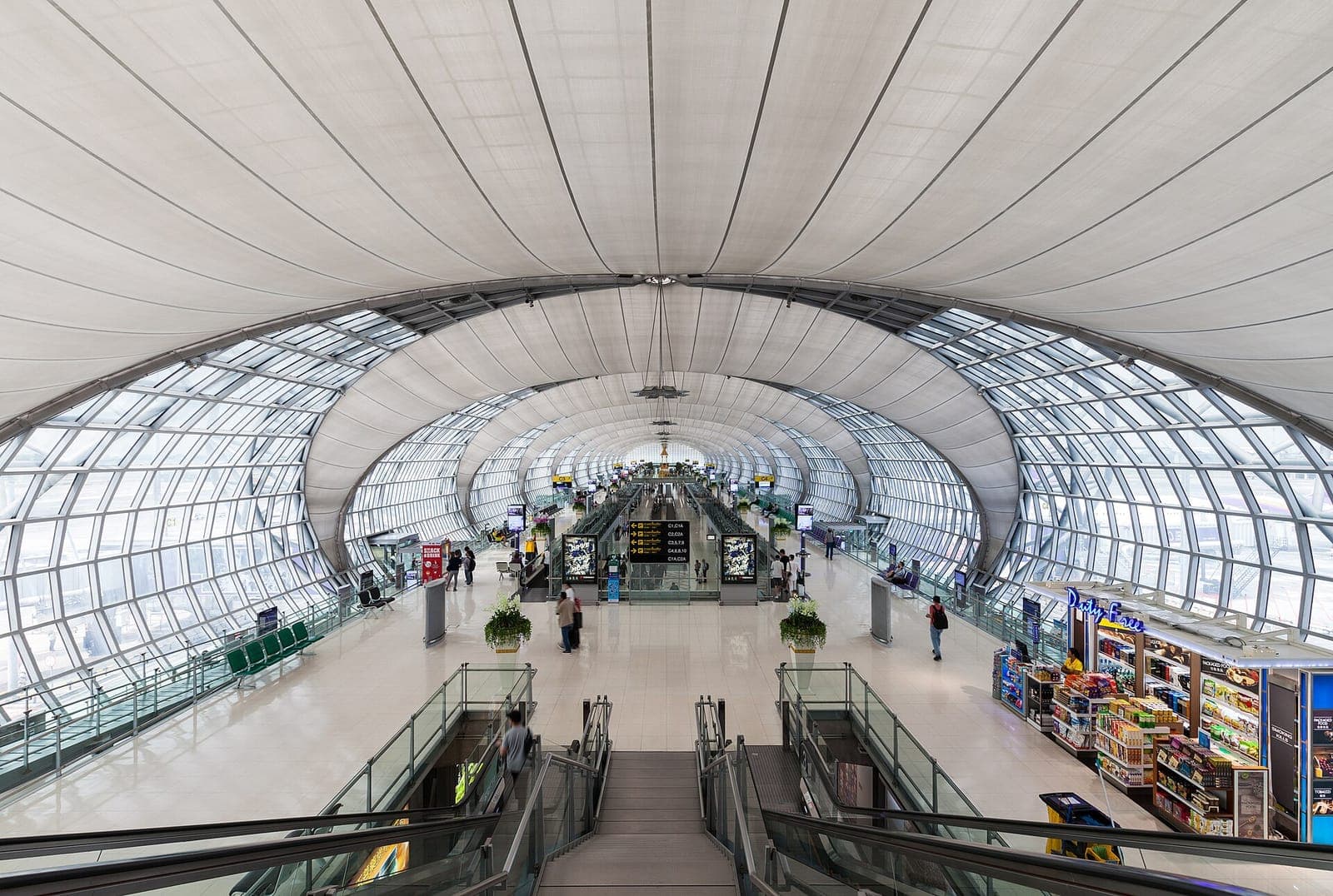
Transport
Suvarnabhumi Airport to Bangkok: rail link, taxi, bus or transfer?
How to get from Suvarnabhumi Airport into Bangkok: Airport Rail Link, the taxi queue, Grab and Bolt, the S1 bus, limousines and transfers, with costs by area.
Updated 29 October 2026
Where to Stay
Where to stay in Bangkok: a neighbourhood guide
Compare Sukhumvit, Siam, Silom, the Riverside, the Old City, Chinatown, Ari and the airport zones to pick the right Bangkok base for your budget and plans.
Updated 29 October 2026
Itineraries
Bangkok in 3 days: a first-timer's itinerary with transport
3-day Bangkok itinerary for first-timers: Old City temples by river boat, modern Bangkok by BTS, then Chatuchak or Ayutthaya, with timings and fares.
Updated 29 October 2026
Travel Tips
Getting around Bangkok: BTS, MRT, boats, taxis and apps
How Bangkok's BTS, MRT, Airport Rail Link, Red Lines, buses, river and canal boats, taxis, Grab, tuk-tuks and motorbike taxis work: fares, hours and tips.
Updated 29 October 2026