Getting around Bangkok: BTS, MRT, boats, taxis and apps
How Bangkok's BTS, MRT, Airport Rail Link, Red Lines, buses, river and canal boats, taxis, Grab, tuk-tuks and motorbike taxis work: fares, hours and tips.
On this page
- Options at a glance
- BTS Skytrain
- MRT: Blue, Purple, Yellow and Pink lines
- Airport Rail Link and the SRT Red Lines
- BRT and public buses
- River and canal boats
- Taxis, Grab and Bolt
- Tuk-tuks and motorbike taxis
- Walking, heat and accessibility
- Which to use when
- A two-day sample movement plan
- Where to check
- Summary checklist
Bangkok is big, hot and famously congested, but it is one of the easier Asian capitals to move around once you know which mode fits which trip. Trains cover the business and shopping districts, boats serve the river and the old city, and taxis, apps and motorbike taxis fill the gaps. Here is how each option works and what it costs as of October 2026; fares change often, so confirm at the station or in the app.
Options at a glance
| Mode | Best for | Approx. fare (THB, Oct 2026) | Typical hours |
|---|---|---|---|
| BTS Skytrain (Sukhumvit, Silom, Gold) | Sukhumvit, Silom, Siam, Chatuchak, ICONSIAM | 17–65; Gold Line about 16 flat | Roughly 05:30 to midnight |
| MRT Blue and Purple lines | Chinatown, Grand Palace area, Rama IX, Bang Sue | 17–44 (Blue) | Roughly 05:30 to midnight |
| MRT Yellow and Pink monorails | Eastern and northern suburbs | About 15–45 | Early morning to around midnight |
| Airport Rail Link | Suvarnabhumi to Makkasan and Phaya Thai | About 15–45 | Roughly 05:30 to midnight |
| SRT Red Lines | Krung Thep Aphiwat to Don Mueang, Rangsit, Taling Chan | 12–42 | 05:00 to around midnight |
| BRT bus | Sathorn to Rama III and Ratchaphruek | About 15 flat | 06:00 to 24:00 |
| Public buses | Everywhere, slowly | 8 (non-air-con), 13–25 (air-con) | Varies by route |
| Chao Phraya Express Boat | Grand Palace, Wat Arun, Khao San, ICONSIAM | About 19–36 by flag | Roughly 06:00 to 19:00, fewer at weekends |
| Khlong Saen Saep canal boat | Old city to Pratunam, Siam and Sukhumvit | About 15–25 | Weekdays 05:30 to 20:30, weekends shorter |
| Metered taxi | Door to door, luggage, late night | 35 flag fall plus 6.50/km and up | 24 hours |
| Grab and Bolt | Fixed-price car or bike rides | Quoted in app | 24 hours |
| Tuk-tuk | Short novelty rides | Negotiated, usually above taxi rate | Day and evening |
| Motorbike taxi | Short hops down a soi | Posted fares from about 15–25 | Daytime, some evenings |
BTS Skytrain
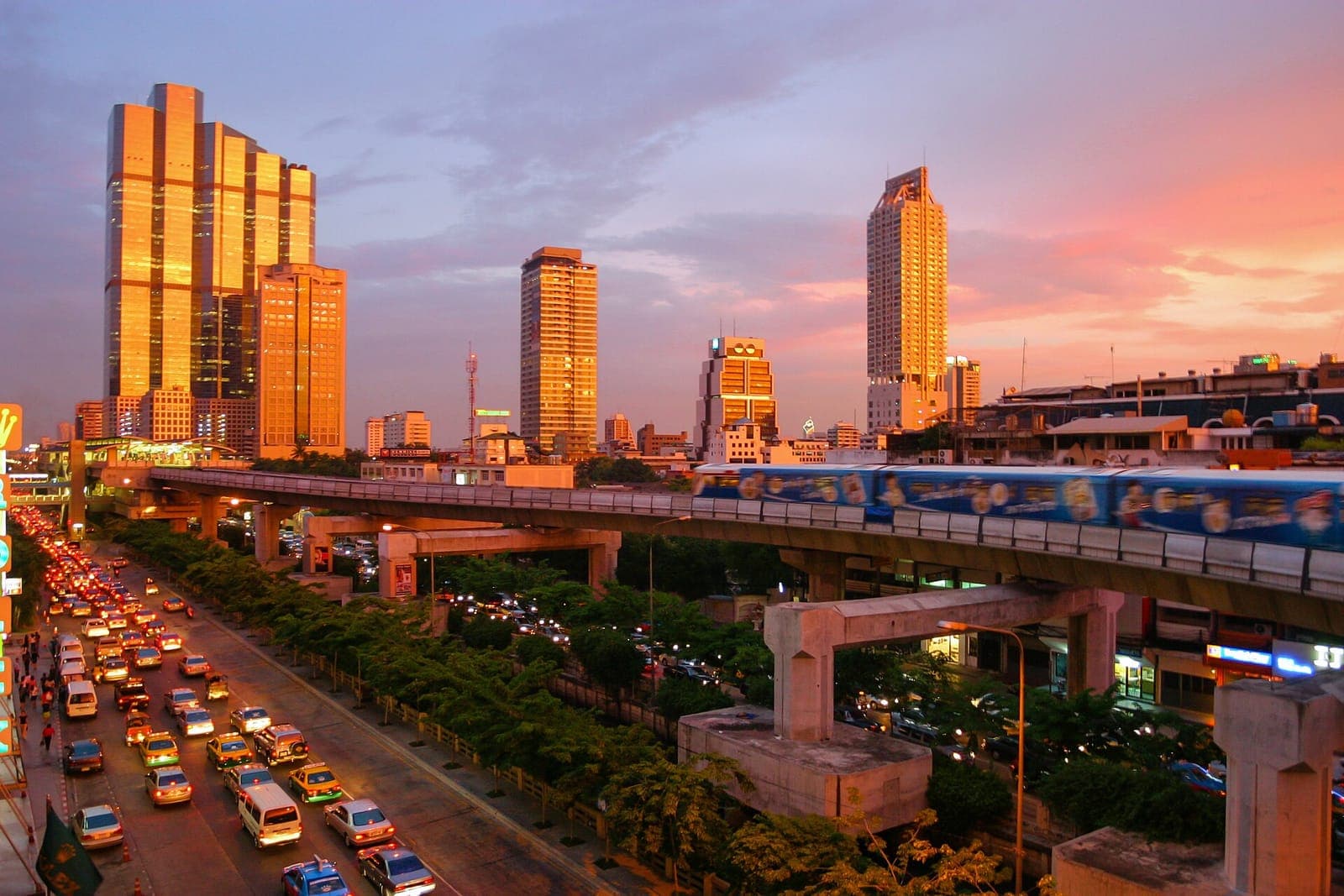
The elevated BTS is the backbone for most visitors. The Sukhumvit Line runs from Khu Khot in the north through Mo Chit (Chatuchak Market), Siam, Asok and On Nut to Kheha. The Silom Line runs from National Stadium (MBK) through Siam, Sala Daeng, Chong Nonsi and Saphan Taksin (Sathorn Pier for river boats) across the river to Bang Wa. The lines cross at Siam inside the paid area. The three-stop Gold Line shuttles from Krung Thon Buri to Charoen Nakhon (ICONSIAM) and Khlong San for a flat fare of about 16 THB.
Fares are by distance: since November 2025 the outer extensions use a 17–45 THB scale and a journey across the whole network is capped at around 65 THB. Last departures from Siam are just after 00:00.
Paying. Buy a single-journey ticket from the machines (coins and small notes; counters give change) or a Rabbit card, the BTS stored-value card: a non-refundable issuing fee of roughly 100–120 THB plus a 100 THB minimum top-up, passport required. Rabbit also works on the Gold Line, BRT and the Yellow and Pink monorails. We could not confirm that BTS gates accept contactless bank cards as of October 2026, so do not rely on tapping a Visa or Mastercard here.
Pros
- Fast and predictable regardless of traffic
- Serves the main hotel, shopping and nightlife districts
- Frequent trains and clear English signage
Cons
- Does not reach the Grand Palace, Khao San or Chinatown directly
- Crowded at peak hours (07:00–09:00 and 17:00–19:30)
- Not every station exit has a lift
MRT: Blue, Purple, Yellow and Pink lines
The MRT Blue Line is a loop-shaped metro linking Hua Lamphong, Wat Mangkon (Chinatown), Sanam Chai (Grand Palace and Wat Pho), Silom, Sukhumvit, Phra Ram 9, Chatuchak Park and Bang Sue. It is the train for the old city. Fares were reset on 3 July 2026 to 17–44 THB; trains run from about 05:30 to midnight. The Purple Line from Tao Poon to Nonthaburi is mainly for commuters.
Payment changed in 2026: old MRT stored-value cards are no longer accepted on the Blue and Purple lines. Instead you tap a contactless credit card (Visa, Mastercard or UnionPay, foreign cards included) at the gate or buy a single-journey token. Foreign debit cards are not guaranteed to work, so carry a credit card or coins.
The Yellow Line (Lat Phrao to Samrong) and Pink Line (Khae Rai to Min Buri) are elevated monorails for the outer suburbs, about 15–45 THB, accepting Rabbit and contactless bank cards. Changing between BTS and MRT (Asok/Sukhumvit, Sala Daeng/Silom, Mo Chit/Chatuchak Park) means leaving one system and paying again; there is no shared fare yet.
Airport Rail Link and the SRT Red Lines
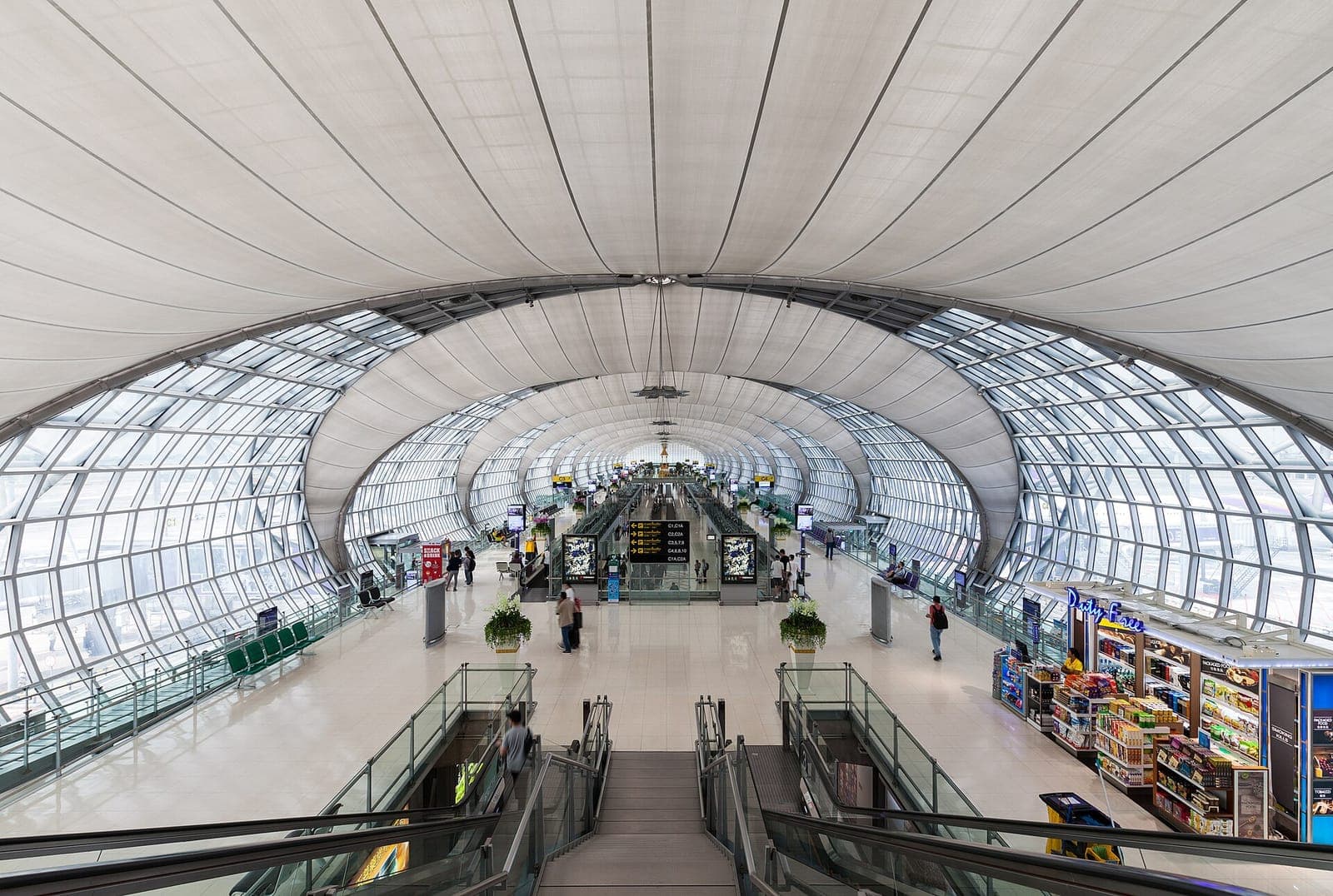
The Airport Rail Link connects Suvarnabhumi Airport with Makkasan (walk to MRT Phetchaburi) and Phaya Thai (BTS) in roughly half an hour for about 15–45 THB. Since November 2025 you can tap a contactless bank card at the gate; tokens are still sold. Our Suvarnabhumi Airport to Bangkok guide compares it with taxis and buses.
The SRT Red Lines start at Krung Thep Aphiwat Central Terminal, Bangkok's main long-distance station. The Dark Red Line reaches Don Mueang Airport and Rangsit (about 23 minutes, 42 THB to Rangsit); the Light Red Line goes to Taling Chan (about 16 minutes, 35 THB). Fares start at 12 THB, trains run from 05:00 to around midnight, and a 40 THB daily cap applies to contactless-card users until the end of November 2026. Heading north by rail? See Bangkok to Chiang Mai.
BRT and public buses
The BRT is a single busway from Sathorn (BTS Chong Nonsi) along Rama III to Ratchaphruek (BTS Talat Phlu): about 15 THB flat by Rabbit card or QR code, 06:00 to midnight, useful mainly for the Rama III riverside hotels.
Ordinary buses go everywhere for almost nothing: 8 THB on the cream-and-red non-air-conditioned buses and roughly 13–25 THB on air-conditioned services, paid in cash to the conductor. The catch is traffic and route knowledge; the ViaBus app shows live bus positions and Google Maps gives route numbers, which makes buses realistic without luggage or a deadline.
River and canal boats
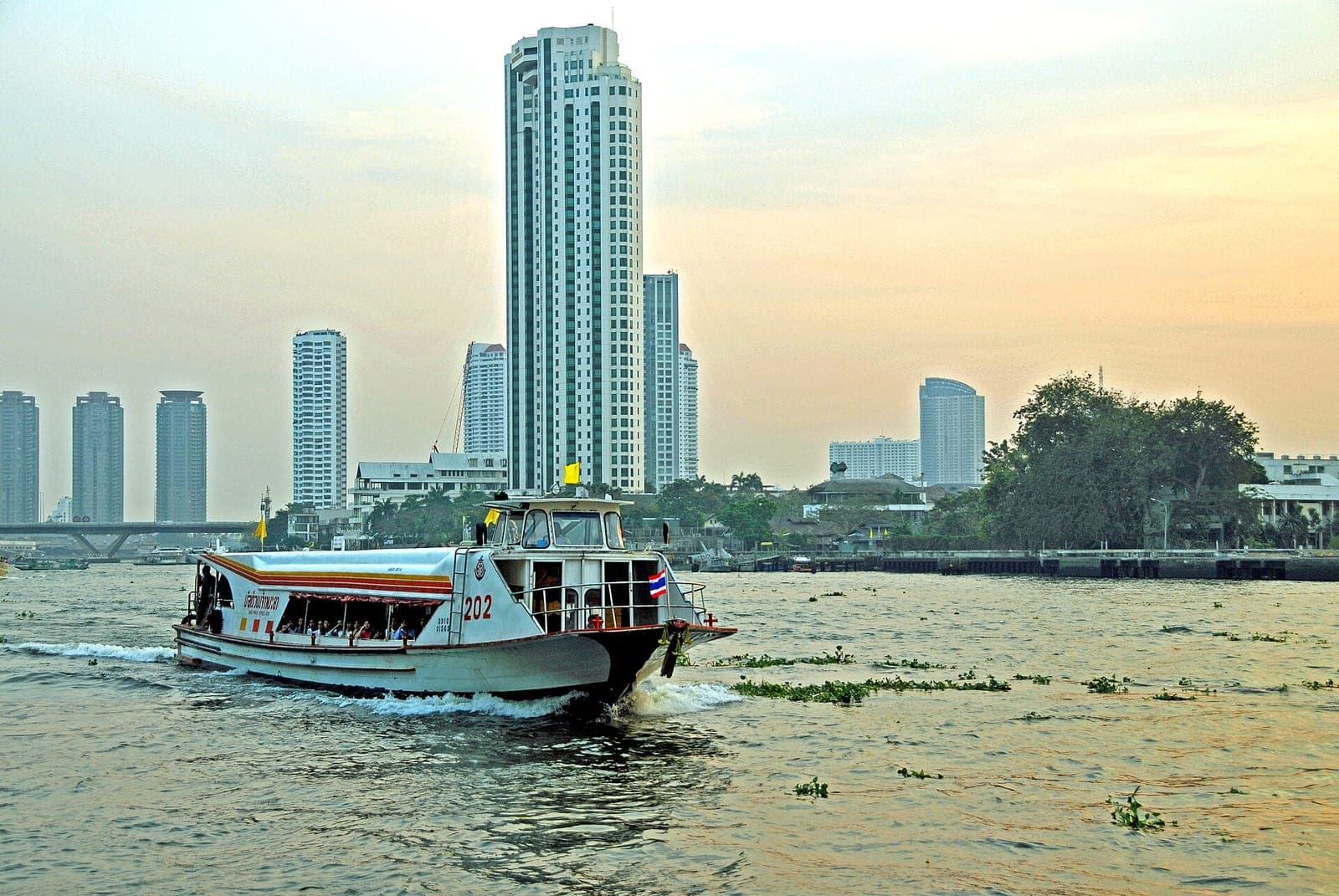
The Chao Phraya Express Boat is transport and sightseeing in one. The orange flag (around 19–20 THB flat) is the everyday service calling at most piers, including Sathorn (Central Pier, BTS Saphan Taksin), Ratchawong (Chinatown), Tha Tien (Wat Pho and the Wat Arun ferry), Tha Chang (Grand Palace) and Phra Arthit (Khao San). Yellow and green-yellow flags are faster commuter runs with fewer stops (24–36 THB); the red flag is an air-conditioned express. The operator lists these as weekday services, and weekend sailings are reduced and finish earlier, so check the pier board. A blue-flag tourist boat sells a hop-on hop-off day pass, and cross-river ferries (a few baht at the pier) shuttle from Tha Tien to Wat Arun.
The Khlong Saen Saep canal boats are the quickest way from the old city to the shops. The Golden Mount line runs from Phan Fa Lilat (near Wat Saket and Khao San) to Pratunam; change there to the NIDA line for Chit Lom, Nana, Asok (Phetchaburi) and the east. Fares are 15–25 THB, cash on board, weekdays about 05:30 to 20:30 and weekends to around 19:00. The boats are noisy, splashy and fast: hold on and leave the suitcase at the hotel.
Pros
- No traffic and great views
- Direct to the Grand Palace, Wat Arun and Khao San areas
- Very cheap
Cons
- Crowded and basic, with a quick jump on and off at busy piers
- Reduced weekend and evening service
- Unsuitable for wheelchairs and large luggage
Taxis, Grab and Bolt
Metered taxis are plentiful and inexpensive by international standards. The flag fall is 35 THB for the first kilometre, then 6.50 THB per kilometre to 10 km, 7 THB to 20 km and 8 THB to 40 km, plus 3 THB per minute when the car crawls below 6 km/h. Expressway tolls are paid by the passenger on top, and official airport ranks add a 50 THB surcharge. These rates date from January 2023; a cross-town ride is usually 80–200 THB in normal traffic.
Insist on the meter: if a driver quotes a flat price or refuses the trip, take the next cab. Show your destination in Thai or on a map, carry small notes, and note the taxi number if something goes wrong (Department of Land Transport hotline 1584).
Grab (cars, taxis and motorbikes) and Bolt (cars and bikes) both operate in Bangkok and remove the negotiation: the price is fixed in the app and you can pay by card. Prices rise in rain and at peak times, and malls and the airport use designated pick-up points.
Tuk-tuks and motorbike taxis
Tuk-tuks are fun for a short evening ride through the old city, but not cheap: a trip that costs 60 THB in a metered taxi is usually offered at 100–200 THB. Agree the price before you get in, and decline any "special tour" with stops at shops or gem dealers.
Motorbike taxis wait at orange-vested ranks at the mouth of most sois and are the local answer for the last kilometre. The posted fare board shows the official rate, generally from about 15–25 THB for a short hop; longer trips are negotiated. Ask for a helmet, keep your knees in, and skip them in rain.
Walking, heat and accessibility
Central distances look walkable on a map, but 32°C with high humidity, broken pavements and detours around expressways change the sums. Walk early or after dark, use the skywalks around Siam, Chit Lom and Sathorn, carry water, and cross roads with locals.
For travellers with reduced mobility, the MRT is the most usable system, with lifts and level boarding at every station. Most BTS stations have at least one lift, but it may be on the other side of the road, and some older central exits are stairs only. Boats, ordinary buses and tuk-tuks are not accessible; Grab cars with a folding wheelchair work well.
Which to use when
- Siam, Sukhumvit, Silom, Chatuchak: BTS, with the MRT for Chinatown and Rama IX.
- Grand Palace, Wat Pho, Wat Arun, Khao San: MRT Blue Line to Sanam Chai, or the orange-flag river boat from Sathorn Pier.
- Old city to Siam or Sukhumvit without traffic: Khlong Saen Saep canal boat.
- Suvarnabhumi Airport: Airport Rail Link if you are light on luggage, metered taxi or Grab otherwise.
- Don Mueang Airport: Red Line to Krung Thep Aphiwat, then the MRT Blue Line.
- Late night or with suitcases: metered taxi or Grab; the trains stop around midnight.
- Last 500 m down a soi: motorbike taxi, or walk if it is cool.
A two-day sample movement plan
Day 1 (old city and river). MRT Blue Line to Sanam Chai for Wat Pho and the Grand Palace, cross-river ferry from Tha Tien to Wat Arun, then orange-flag boat north to Phra Arthit for Khao San and lunch. Khlong Saen Saep boat from Phan Fa Lilat to Pratunam, walk to Siam for the evening malls, BTS back to the hotel.
Day 2 (markets and modern Bangkok). BTS to Mo Chit for Chatuchak Weekend Market (or MRT Kamphaeng Phet to arrive inside it). After lunch, MRT to Wat Mangkon for Chinatown, walk to Ratchawong Pier and take the river boat to Sathorn for sunset. Taxi or Grab home once traffic eases after 20:00.
This plan pairs with our Bangkok 3-day itinerary and Where to stay in Bangkok. A hotel within ten minutes' walk of a BTS or MRT station is the single decision that most improves a Bangkok stay.
Where to check
Summary checklist
- Base yourself near a BTS or MRT station and learn the Siam interchange.
- Single-journey BTS tickets for a few rides; a Rabbit card if you ride daily.
- A contactless credit card for the MRT, monorails, Red Lines and Airport Rail Link.
- River boat for the old city, canal boat to beat the traffic to Siam.
- Meter on in taxis, or Grab and Bolt for a fixed price; negotiate tuk-tuks first.
- Stay off the roads in the morning and evening peaks.
Sources and when we checked
We checked the following sources when writing this guide. Timetables, prices and rules change; confirm with the operator before you travel.
- BTS Skytrain – train times and frequency ↗ (opens in a new tab)(checked 29 October 2026)
- BEM – MRT Blue and Purple Line timetable and fare calculator ↗ (opens in a new tab)(checked 29 October 2026)
- BEM – EMV contactless payment on the MRT ↗ (opens in a new tab)(checked 29 October 2026)
- Thai PBS Verify – New fares for Bangkok's MRT Blue Line set at 17–44 baht ↗ (opens in a new tab)(checked 29 October 2026)
- The Nation – BTS introduces new 17–45 baht fare structure (Green Line extensions) ↗ (opens in a new tab)(checked 29 October 2026)
- SRT Electrified Train – Red Line fares and timetables ↗ (opens in a new tab)(checked 29 October 2026)
- Thailand PRD – Contactless ticketing for the Airport Rail Link ↗ (opens in a new tab)(checked 29 October 2026)
- Chao Phraya Express Boat – lines and fares ↗ (opens in a new tab)(checked 29 October 2026)
- The Nation – Bangkok taxi fares to start rising from today (fare table) ↗ (opens in a new tab)(checked 29 October 2026)
- Thairath – Cabinet revokes 20-baht flat fare, approves unified 17–45 baht fare ↗ (opens in a new tab)(checked 29 October 2026)
Thai Route Guide is an independent information site operated by IMPADX. We do not sell tickets, accommodation or tours. Links go to the operator or a third-party platform; bookings are made with them under their terms.
Related guides
View all →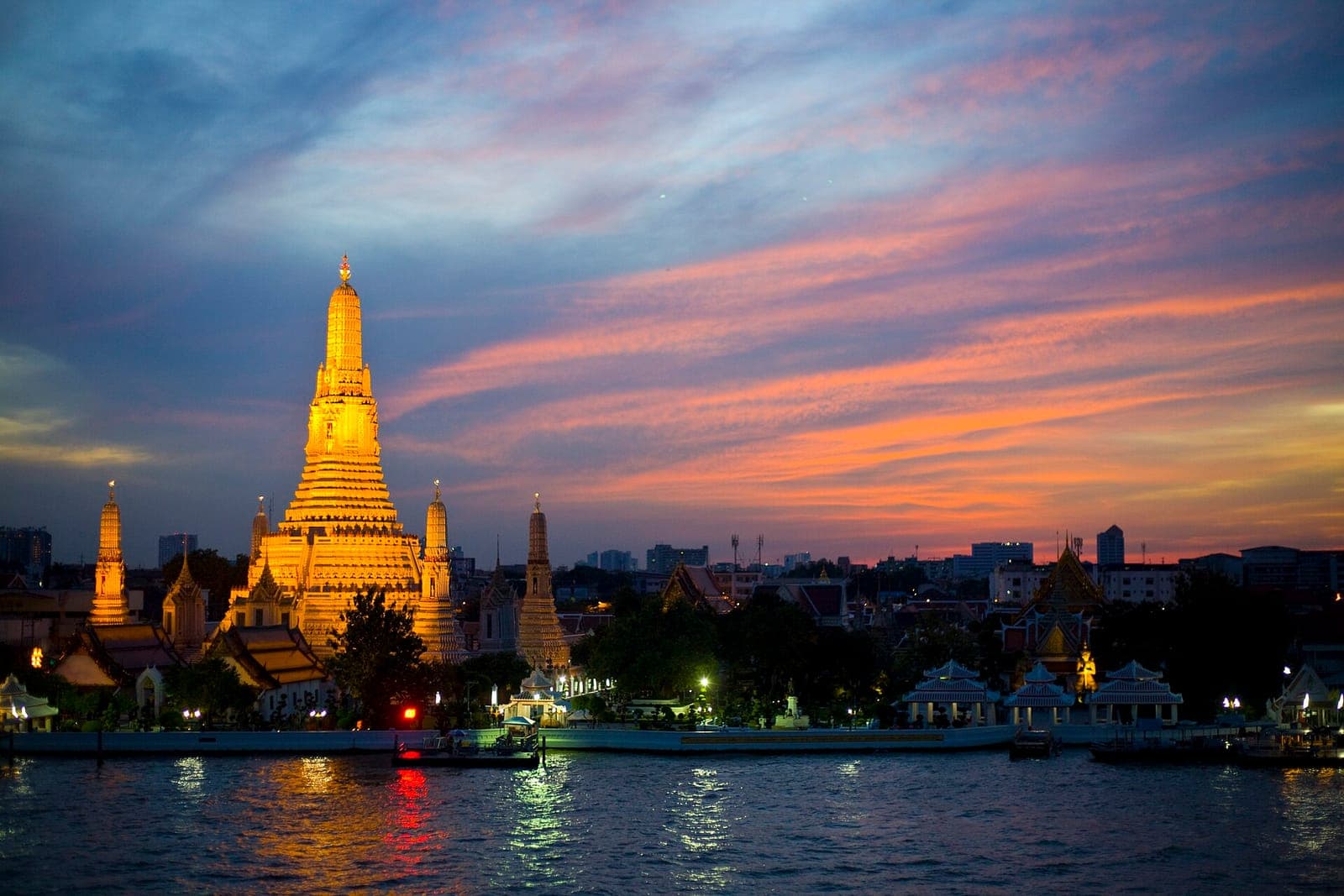
Destinations
Bangkok travel guide: getting there, getting around and what to see
Practical Bangkok guide for first-time and repeat visitors: both airports, BTS, MRT, boats and taxis, main sights, where to stay and what to check before going.
Updated 29 October 2026
Transport
Suvarnabhumi Airport to Bangkok: rail link, taxi, bus or transfer?
How to get from Suvarnabhumi Airport into Bangkok: Airport Rail Link, the taxi queue, Grab and Bolt, the S1 bus, limousines and transfers, with costs by area.
Updated 29 October 2026
Where to Stay
Where to stay in Bangkok: a neighbourhood guide
Compare Sukhumvit, Siam, Silom, the Riverside, the Old City, Chinatown, Ari and the airport zones to pick the right Bangkok base for your budget and plans.
Updated 29 October 2026
Itineraries
Bangkok in 3 days: a first-timer's itinerary with transport
3-day Bangkok itinerary for first-timers: Old City temples by river boat, modern Bangkok by BTS, then Chatuchak or Ayutthaya, with timings and fares.
Updated 29 October 2026