Where to stay in Bangkok: a neighbourhood guide
Compare Sukhumvit, Siam, Silom, the Riverside, the Old City, Chinatown, Ari and the airport zones to pick the right Bangkok base for your budget and plans.
On this page
- How to choose: four questions
- Sukhumvit: Nana, Asok, Phrom Phong, Thonglor and Ekkamai
- Siam, Pratunam and Ratchathewi
- Silom and Sathorn
- Riverside: Charoen Krung and the ICONSIAM side
- Rattanakosin, Khao San and the Old City
- Chinatown (Yaowarat)
- Ari
- Near the airports: Lat Krabang and Don Mueang
- Areas compared
- How to read a Bangkok hotel listing
- Where to check and book
Bangkok is huge, hot and often gridlocked, so where you sleep shapes your trip more than in most cities. A room that looks central on a map can still mean 45 minutes in a taxi to the Grand Palace; one beside a BTS station gets you everywhere faster. This guide covers the main areas travellers choose, who each suits, how you get around from there, and what to check in a listing. For the city itself, see our Bangkok destination guide and the Bangkok 3-day itinerary.
How to choose: four questions
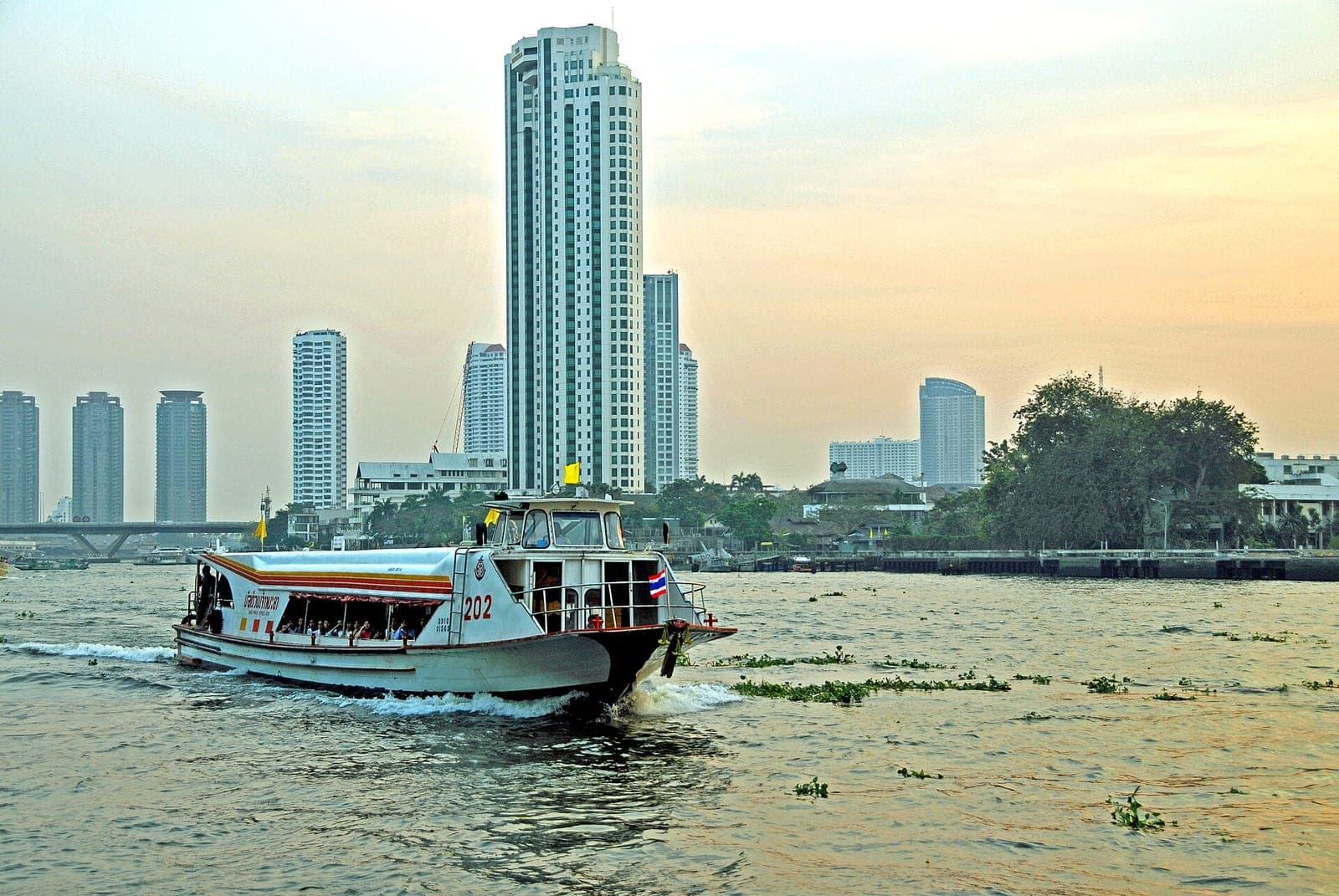
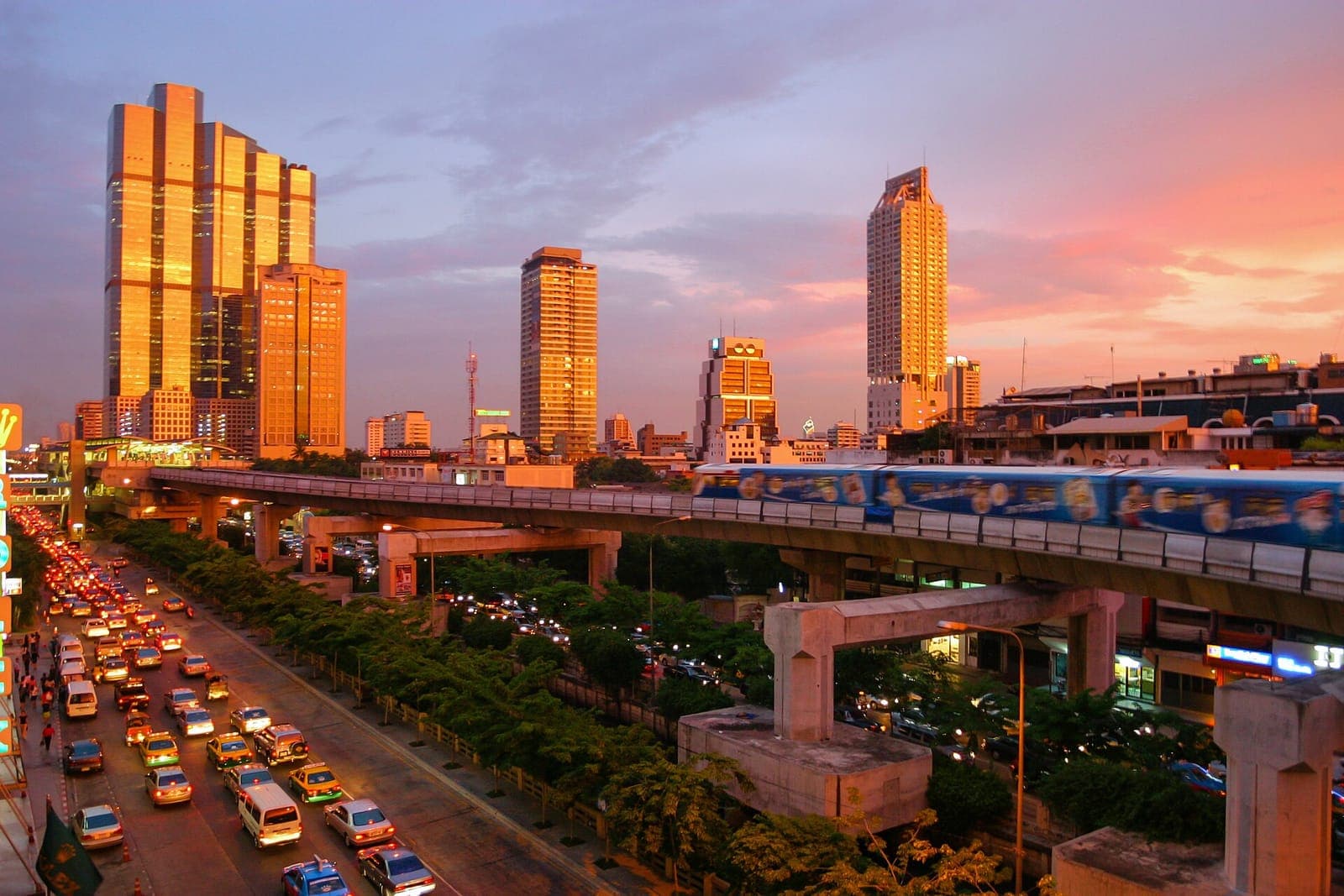
1. How will you move around? Rail is the fastest way across Bangkok. The BTS Skytrain has two main lines, Sukhumvit and Silom, crossing at Siam. The MRT Blue line runs under the business districts, loops through Chinatown and the Old City, and meets the BTS at Asok/Sukhumvit, Sala Daeng/Silom and Mo Chit/Chatuchak Park. The Airport Rail Link runs from Suvarnabhumi to Makkasan (a walk from MRT Phetchaburi) and Phaya Thai (BTS). The Chao Phraya Express Boat serves the river, with Sathorn pier next to BTS Saphan Taksin. BEM lists MRT Blue line service as roughly 06:00 to midnight and BTS last trains leave Siam around midnight, so night owls should think about taxi access too.
2. What do you want to see? The Grand Palace, Wat Pho and Wat Arun are in Rattanakosin, which has limited rail. Shopping, food and nightlife cluster along Sukhumvit, Siam and Silom. Temples: stay west. Malls and bars: stay east.
3. How much noise can you take? Main roads and nightlife sois are loud until late, especially around Nana, Khao San and Silom. A room on a quiet side street or an inner courtyard matters.
4. What is your budget? Every area has hostels and five-star hotels, but the mix differs. Khao San and Chinatown lean budget, Sukhumvit and Siam are strongest in the mid-range, and the Riverside and Sathorn hold most of the luxury stock. Treat any price you see as of October 2026 and confirm it on the booking platform.
Sukhumvit: Nana, Asok, Phrom Phong, Thonglor and Ekkamai
Who it suits: first-time visitors who want convenience, food lovers, longer stays.
Transport: the BTS Sukhumvit line runs the length of the road with stations at Nana, Asok, Phrom Phong, Thong Lo and Ekkamai. Asok is the interchange with MRT Sukhumvit, a direct line to Chinatown and the Old City stations (Sam Yot, Sanam Chai). Ekkamai is beside the Eastern Bus Terminal, handy for Pattaya.
Vibe: Nana and Asok are busy and international, with hotels of every grade; Nana has a well-known red-light strip and feels seedy at night. Phrom Phong is calmer and more upmarket, with big malls and parks. Thonglor and Ekkamai are the fashionable end, with cafes and cocktail bars, but far from the sights.
Price band: the widest range in the city. Hostels and budget hotels fill the sois near Nana and Asok; mid-range dominates; Phrom Phong and Thonglor skew higher.
Downsides: a long way from the river and temples, heavy traffic, and some sois with barely a footpath. "Sukhumvit" covers kilometres of road, so check which soi a hotel is on and the real walk to the station.
Pros
- BTS stations every few hundred metres
- Largest choice of hotels and restaurants
- Easy MRT link to Chinatown and the Old City
Cons
- Far from the river and temples
- Nana and lower Sukhumvit are noisy and seedy at night
- Long sois mean walks in the heat
Siam, Pratunam and Ratchathewi
Who it suits: shoppers, families who want to be central, arrivals by Airport Rail Link.
Transport: Siam is where the BTS Sukhumvit and Silom lines cross, so almost everywhere is one ride away. Phaya Thai, one stop north, is the end of the Airport Rail Link from Suvarnabhumi, making Ratchathewi one of the easiest areas to reach with luggage. Pratunam is a 10 to 15 minute walk from Siam or Chit Lom and has no rail station of its own, though the Saen Saep canal boat passes it.
Vibe: malls, food courts and crowds around Siam and Ratchaprasong; wholesale clothing markets and a scruffier, more local feel in Pratunam; residential streets and mid-range hotels in Ratchathewi.
Price band: mid-range to upper mid-range at Siam, luxury along Ratchadamri and Ploenchit, cheaper in Pratunam and Ratchathewi.
Downsides: few genuinely budget rooms right at Siam and little nightlife of its own; Pratunam means walking or taxis on congested roads.
Pros
- Centre of the BTS network
- Airport Rail Link ends at Phaya Thai
- Shopping and food courts everywhere
Cons
- Few cheap rooms right at Siam
- Pratunam is not on the rail network
- Crowded and traffic-choked
Silom and Sathorn
Who it suits: business travellers, couples, anyone who wants both rail lines plus the river boat.
Transport: BTS Sala Daeng and Chong Nonsi on the Silom line, MRT Silom and Lumphini on the Blue line, and Saphan Taksin at the river end, where the BTS meets Sathorn pier for the Express Boat and hotel shuttle boats.
Vibe: office towers by day, Lumphini Park for early walks, and a lively street-food and bar scene around Silom and Patpong at night. Sathorn is quieter, with many of Bangkok's luxury hotels, rooftop bars and serviced apartments.
Price band: mid-range to luxury, with hostels and small hotels in the sois off Silom and near Saphan Taksin.
Downsides: Patpong's night market is noisy and the touting tiresome; Sathorn Road is wide and unpleasant on foot, so sois that look close on a map can involve long detours.
Pros
- Both rail lines and the river boat
- Lumphini Park on the doorstep
- Strong choice of upper-end hotels
Cons
- Office-district feel at weekends
- Patpong area is noisy
- Sathorn sois can be a long walk from a station
Riverside: Charoen Krung and the ICONSIAM side
Who it suits: travellers who want views and a slower pace, and those planning to see the river temples by boat.
Transport: BTS Saphan Taksin and Sathorn pier are the hub. The big riverside hotels run free shuttle boats to Sathorn pier, and the Express Boat stops at piers along Charoen Krung. On the Thonburi bank, ICONSIAM has its own pier and the short Gold line links it to BTS Krung Thon Buri. Boat timetables thin out in the evening, so check the operator's current schedule, especially at weekends.
Vibe: Charoen Krung is one of Bangkok's oldest commercial streets, now dotted with galleries, old shophouses and the Bangrak food scene, with the grand hotels on the waterfront. The ICONSIAM side is newer and quiet once the mall closes.
Price band: the luxury heartland, but the lanes behind Charoen Krung also hold boutique guesthouses and hostels at moderate prices.
Downsides: once the boats stop you rely on taxis, and Sukhumvit nightlife is far away. Read "river view" room types carefully.
Pros
- River views and boat access to the temples
- Free hotel shuttle boats to the BTS
- Characterful old streets and galleries
Cons
- Reliant on boats and taxis after dark
- Far from Sukhumvit and Siam
- Premium prices on the waterfront itself
Rattanakosin, Khao San and the Old City
Who it suits: backpackers, temple-focused short stays, anyone who wants to walk to the Grand Palace at opening time.
Transport: the weak point. The MRT Blue line extension gives the Old City two useful stations, Sanam Chai (near Wat Pho) and Sam Yot, but Khao San is a 20 to 25 minute walk from either. The Express Boat at Phra Arthit and Tha Chang piers connects to Sathorn pier and the BTS. From Suvarnabhumi, the airport lists the S1 bus to Sanam Luang at 60 THB, running roughly 06:00 to 17:00; outside those hours it is a taxi or rail plus taxi.
Vibe: Khao San Road and Rambuttri are the backpacker hub: bars, street food, cheap massages and noise into the small hours. Phra Athit and the lanes near the river are quieter and more local. South of Sanam Luang, around Wat Pho and Tha Tien, boutique hotels in converted shophouses look across to Wat Arun.
Price band: the biggest concentration of hostels and cheap guesthouses in Bangkok, plus a growing number of design-led small hotels.
Downsides: no BTS, taxis that sometimes refuse the meter (use an app), and most evenings out involve a journey. Khao San itself is not a restful place to sleep.
Pros
- Walk to the Grand Palace and Wat Pho
- Cheapest beds in the city
- Boat piers for river trips
Cons
- No BTS and a long walk to the MRT
- Loud nightlife on Khao San and Rambuttri
- Taxis sometimes refuse the meter
Chinatown (Yaowarat)
Who it suits: food travellers, photographers, people who want an atmospheric base between the Old City and the business districts.
Transport: MRT Wat Mangkon sits under Yaowarat Road, with Hua Lamphong one stop away; the Blue line reaches Silom in minutes and Sukhumvit with one change. Ratchawong pier on the Express Boat is a short walk from the main street.
Vibe: gold shops, shrines and dense alleys by day, street-food stalls spilling onto Yaowarat by night. Talat Noi, towards the river, has cafes and hostels in restored shophouses.
Price band: mostly budget to mid-range, with hostels and a handful of stylish hotels in old buildings.
Downsides: small rooms, chaotic streets, and a main road that is noisy until late.
Pros
- MRT station in the heart of the district
- Some of the best street food in Bangkok
- Short hop to both the Old City and Silom
Cons
- Noise and crowds every evening
- Smaller rooms, fewer large hotels
- Little greenery or quiet
Ari
Who it suits: repeat visitors, remote workers, anyone who wants a residential neighbourhood with cafes rather than tourists.
Transport: BTS Ari on the Sukhumvit line, three stops north of Siam; Mo Chit, for the Chatuchak weekend market and the northern bus terminal, is two stops further.
Vibe: leafy sois, brunch spots, bakeries and small bars; Thai families and office workers rather than backpackers. Evenings are quiet.
Price band: mid-range hotels and serviced apartments, plus a few hostels; fewer options than the central areas.
Downsides: nothing to see on the doorstep, and the Old City and river are a train ride plus a taxi away.
Pros
- Calm, local atmosphere
- On the BTS for Siam and Chatuchak
- Good cafes and restaurants
Cons
- No sights nearby
- Limited hotel choice
- Far from the river
Near the airports: Lat Krabang and Don Mueang
Who it suits: very early flights, long layovers, late-night arrivals.
Suvarnabhumi (Lat Krabang): the Airport Rail Link's first stop out of the airport is Lat Krabang, and hotels with free airport shuttles cluster around it. The rail link to Phaya Thai takes under half an hour, so a Lat Krabang hotel still works for a day in town; see Suvarnabhumi Airport to Bangkok.
Don Mueang: hotels line the Vibhavadi Rangsit and Phahonyothin roads near the airport. The SRT Red Line stops at Don Mueang station on its way to Krung Thep Aphiwat Central Terminal, and the airport's A1 bus runs to BTS Mo Chit and the Chatuchak bus terminal for a flat fare of about 30 THB until around midnight.
Downsides: functional areas with little to do, and "near the airport" can still mean 20 minutes by shuttle.
Areas compared
| Area | Rail access | Vibe | Typical price band | Best for |
|---|---|---|---|---|
| Sukhumvit (Nana to Ekkamai) | BTS Sukhumvit line, MRT at Asok | Busy, international, foodie | Budget to luxury, strongest mid-range | First-timers, longer stays |
| Siam / Pratunam / Ratchathewi | BTS both lines, Airport Rail Link at Phaya Thai | Malls and crowds | Mid-range to luxury (cheaper in Pratunam) | Shoppers, families |
| Silom / Sathorn | BTS Silom line, MRT Blue line, Sathorn pier | Business by day, bars by night | Mid-range to luxury | Couples, business, river plus rail |
| Riverside | BTS Saphan Taksin, boats | Scenic, slow, grand | Mostly upper range, some boutique | Views, temple boat trips |
| Old City / Khao San | MRT Sanam Chai and Sam Yot, river piers | Temples and backpackers | Budget to boutique | Sightseeing, tight budgets |
| Chinatown | MRT Wat Mangkon, Ratchawong pier | Dense, atmospheric, food | Budget to mid-range | Food, photography |
| Ari | BTS Ari | Residential, cafes | Mid-range | Repeat visitors, remote workers |
| Lat Krabang / Don Mueang | Airport Rail Link; SRT Red Line and A1 bus | Functional | Budget to mid-range | Early flights, layovers |
How to read a Bangkok hotel listing
- Distance to the station is the key number. Listings often quote distance to a landmark rather than to a BTS or MRT entrance. Check the walking route in Google Maps; 600 m along Sukhumvit at midday feels much longer than it sounds.
- Which side of the road? Sukhumvit, Rama IV and Sathorn have few crossings, so a hotel "opposite" a station may need a footbridge or a detour.
- Noise. Reviews mentioning road noise, a nearby bar or construction are worth more than star ratings. Ask for a high floor away from the street.
- Late check-in. Many flights land after midnight. Confirm reception is open 24 hours, especially at hostels and guesthouses in the Old City.
- Windowless rooms. Budget hotels in Chinatown and Silom sometimes list them at low rates. Read the room description, not just the photos.
Where to check and book
Compare the same hotel on two platforms and its own website; cancellation terms and breakfast often differ more than the headline price. For moving around after you arrive, see getting around Bangkok.
Sources and when we checked
We checked the following sources when writing this guide. Timetables, prices and rules change; confirm with the operator before you travel.
- BTS Skytrain – official site ↗ (opens in a new tab)(checked 29 October 2026)
- BTS Skytrain – train times and frequency ↗ (opens in a new tab)(checked 29 October 2026)
- BEM – MRT system map and Blue line service hours ↗ (opens in a new tab)(checked 29 October 2026)
- SRT Electrified Train (Red Line / Airport Rail Link operator) ↗ (opens in a new tab)(checked 29 October 2026)
- Chao Phraya Express Boat – lines and fares ↗ (opens in a new tab)(checked 29 October 2026)
- Suvarnabhumi Airport (AOT) – public transport ↗ (opens in a new tab)(checked 29 October 2026)
- Don Mueang Airport (AOT) – A1 bus and transport ↗ (opens in a new tab)(checked 29 October 2026)
- Booking.com – Bangkok hotels ↗ (opens in a new tab)(checked 29 October 2026)
- Booking.com – Khao San area hotels ↗ (opens in a new tab)(checked 29 October 2026)
Thai Route Guide is an independent information site operated by IMPADX. We do not sell tickets, accommodation or tours. Links go to the operator or a third-party platform; bookings are made with them under their terms.
Related guides
View all →
Destinations
Bangkok travel guide: getting there, getting around and what to see
Practical Bangkok guide for first-time and repeat visitors: both airports, BTS, MRT, boats and taxis, main sights, where to stay and what to check before going.
Updated 29 October 2026
Itineraries
Bangkok in 3 days: a first-timer's itinerary with transport
3-day Bangkok itinerary for first-timers: Old City temples by river boat, modern Bangkok by BTS, then Chatuchak or Ayutthaya, with timings and fares.
Updated 29 October 2026
Transport
Suvarnabhumi Airport to Bangkok: rail link, taxi, bus or transfer?
How to get from Suvarnabhumi Airport into Bangkok: Airport Rail Link, the taxi queue, Grab and Bolt, the S1 bus, limousines and transfers, with costs by area.
Updated 29 October 2026
Travel Tips
Getting around Bangkok: BTS, MRT, boats, taxis and apps
How Bangkok's BTS, MRT, Airport Rail Link, Red Lines, buses, river and canal boats, taxis, Grab, tuk-tuks and motorbike taxis work: fares, hours and tips.
Updated 29 October 2026