Bangkok in 3 days: a first-timer's itinerary with transport
3-day Bangkok itinerary for first-timers: Old City temples by river boat, modern Bangkok by BTS, then Chatuchak or Ayutthaya, with timings and fares.
- Itineraries
- 3 days
On this page
- Overview
- Day 1: the Old City and the river
- Day 2: modern Bangkok by Skytrain
- Day 3: choose your own
- Option A: Chatuchak Weekend Market plus cafés (Saturday or Sunday only)
- Option B: Ayutthaya day trip
- Option C: floating market and railway market tour
- Where to base yourself
- Approximate budget (THB per person per day)
- Where to check and book
- FAQ
- Is three days enough for Bangkok?
- Should I use taxis instead of public transport?
Three days is enough to see the headline sights of Bangkok without rushing, provided you let the transport do the planning. This itinerary groups the city into three zones that each sit on one transport line: the Old City (Rattanakosin) along the Chao Phraya River on Day 1, the modern centre along the BTS Skytrain on Day 2, and a day out of the centre (or out of the city) on Day 3. It is written for first-time visitors who want a moderate pace: one big sight before lunch, a lighter afternoon, evenings for food.
Assumptions: three full days (arrival and departure days are extra), public transport, and a willingness to confirm hours and prices before you go. All figures are approximate as of October 2026 and change often. For getting in from the airport, see our Suvarnabhumi to Bangkok guide; for the city's transport in more depth, see Getting around Bangkok.
Overview
| Day | Zone | Highlights | Main transport |
|---|---|---|---|
| 1 | Old City (Rattanakosin) and the river | Grand Palace, Wat Pho, Wat Arun, sunset on the Chao Phraya | MRT Blue Line to Sanam Chai or Chao Phraya Express Boat; cross-river ferry |
| 2 | Modern Bangkok | Jim Thompson House, Siam malls, Lumphini or Benjakitti park, Chinatown (Yaowarat) at night | BTS Sukhumvit and Silom lines, MRT Blue Line |
| 3 | Your pick | Chatuchak Weekend Market plus Ari or Thonglor cafés; or Ayutthaya day trip; or floating and railway markets tour | BTS and MRT to Chatuchak; train or minivan to Ayutthaya; tour minibus |
Day 1: the Old City and the river
The Grand Palace, Wat Pho and Wat Arun are within a short walk or a two-minute ferry of each other, so this day needs almost no transport once you arrive. Dress for temples from the start: shoulders and knees covered, no sleeveless tops, see-through fabrics, short shorts, torn or tight trousers, or mini skirts. The Grand Palace enforces this at the gate.
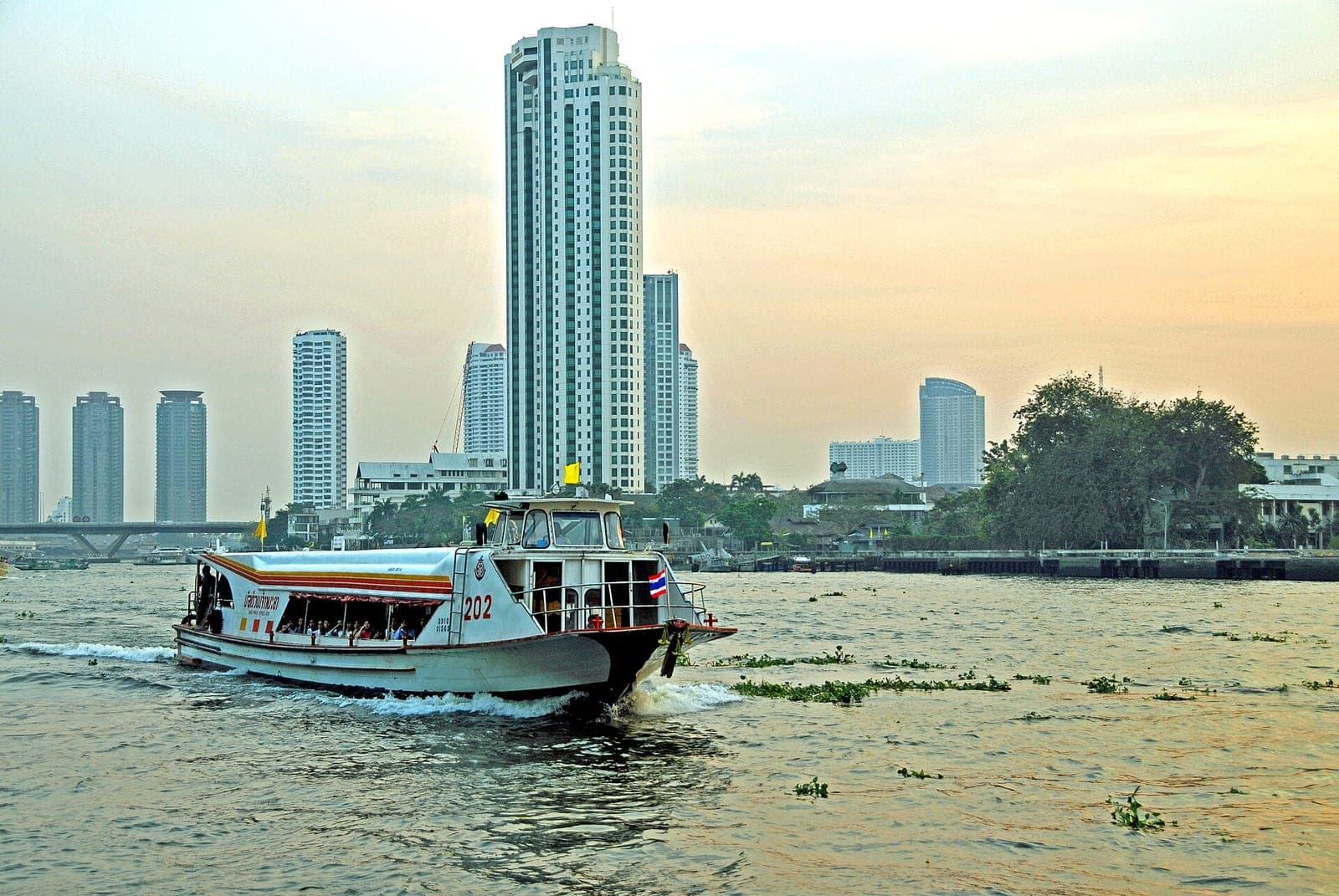
Getting there (08:00). From Sukhumvit or Silom, take the MRT Blue Line to Sanam Chai station; the exit is beside Museum Siam, about five minutes on foot from Wat Pho and ten to fifteen from the Grand Palace. From the Silom and Sathorn side, the more scenic route is the Chao Phraya Express Boat from Sathorn (Central) pier, next to BTS Saphan Taksin, north to Tha Tien (for Wat Pho) or Tha Chang (for the Grand Palace). The orange-flag commuter boats charge a flat fare of around 19 THB and run on weekdays; the blue-flag Chao Phraya Tourist Boat runs daily with a hop-on hop-off day pass and English announcements.
Grand Palace and Wat Phra Kaew (08:30 to 11:00). Be at the Mani Noppharat Gate on Na Phra Lan Road when it opens at 08:30. Tickets cost 500 THB for foreign visitors and are sold until 15:30; the official site gives the closing time as both 15:30 and 16:30, so treat the earlier one as the last safe entry. The ticket includes the Temple of the Emerald Buddha and the Queen Sirikit Museum of Textiles. You can buy online up to a month ahead, but online tickets are non-refundable and cannot be moved to another date. An audio guide is 200 THB against a passport or card deposit. Allow two to two and a half hours, and ignore anyone outside who tells you the palace is closed.
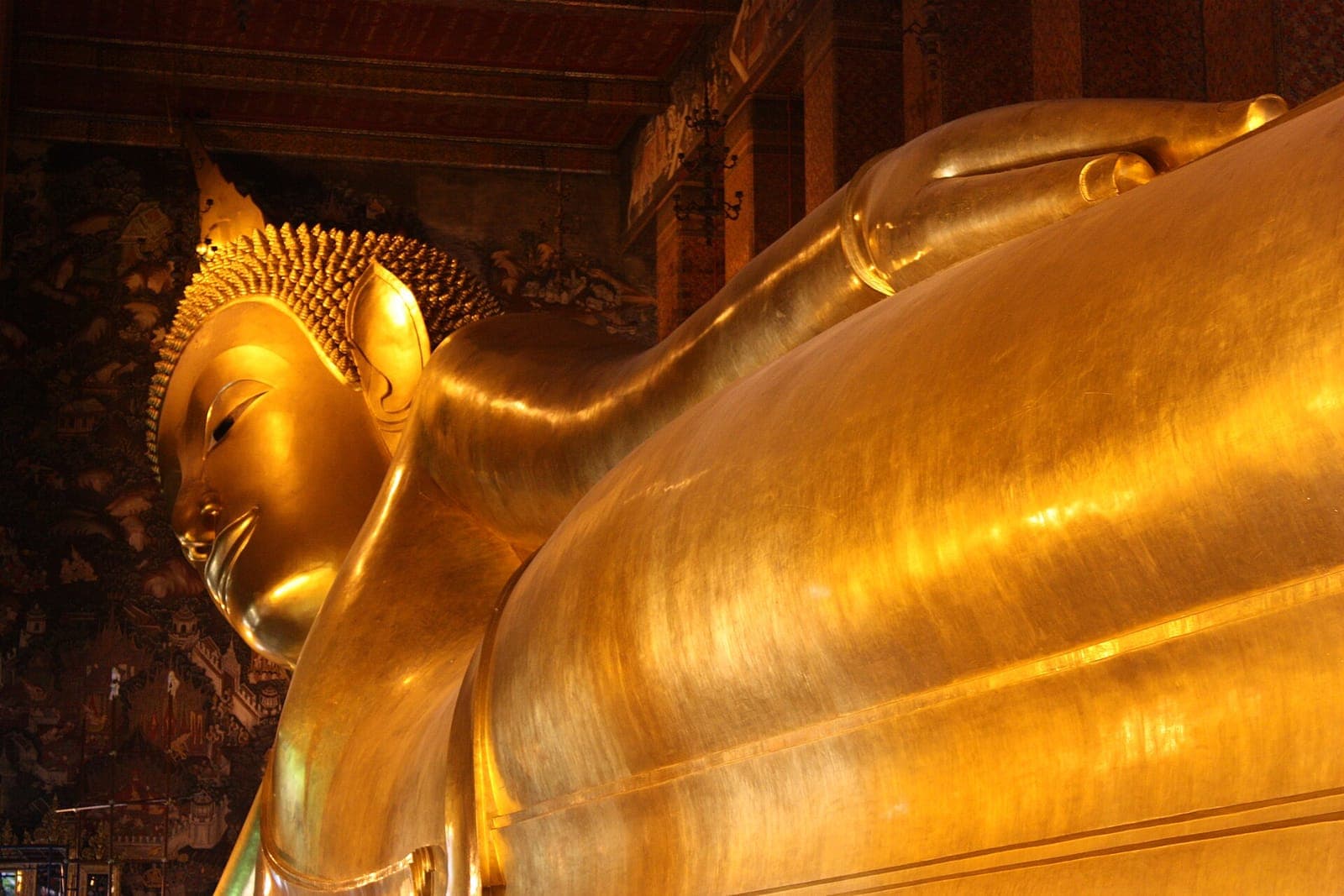
Wat Pho (11:15 to 13:00). Walk ten minutes south along the palace wall to Wat Pho, home of the 46-metre Reclining Buddha. It is open daily from 08:00 to 19:30; entry for foreign visitors is 300 THB. The temple's massage school charges about 340 THB for 30 minutes and 520 THB for an hour, a sensible way to sit out the midday heat. Lunch at the small restaurants between Wat Pho and Tha Tien pier.
Wat Arun (14:00 to 15:30). From Tha Tien pier, take the cross-river ferry (a few baht, pay in cash at the pier) across to Wat Arun. Entry is roughly 200 THB for foreign visitors, with hours of about 08:00 to 18:00; we could not confirm these on an official page, so check on arrival. You can climb part way up the central prang for river views.
Late afternoon and evening. Ferry back to Tha Tien and either continue north by boat to Phra Athit pier for Banglamphu and the Khao San Road area, or south to Sathorn pier for the BTS. Riverside bars and restaurants on the Tha Tien side face Wat Arun, which is lit after dark; the food stalls around Phra Athit road make an easy, low-cost dinner.
Rainy-day swaps. Museum Siam (at Sanam Chai station) and the National Museum near Sanam Luang are both indoors. In the rainy season (roughly May to October) showers tend to arrive mid-afternoon, so front-load the outdoor sights.
Day 2: modern Bangkok by Skytrain
Today runs along the BTS, with one short MRT hop. Start a little later, as most of these places open at 10:00.
Jim Thompson House (10:00 to 11:30). Take the BTS Silom Line to National Stadium, Exit 1; the museum is at the end of Soi Kasemsan 2, a few minutes' walk. It is open daily from 10:00 to 17:00, last tour at 17:00. Entry is 250 THB for adults and 150 THB for ages 10 to 21 (bring ID); children under 10 go free. You can only enter the teak houses with a guide (English and several other languages), and walk-in slots are usually available if online reservations are full. The Bangkok Art and Culture Centre is across the junction if you want an indoor add-on.
Siam (12:00 to 14:00). One stop east on the BTS, or a ten-minute walk, brings you to Siam, the interchange of the two BTS lines. Siam Paragon, Siam Center and MBK all have large food courts where lunch is 80 to 200 THB, and the air conditioning is welcome in the hottest part of the day.
Park time (15:00 to 18:00). For Lumphini Park, the city's classic green space with its resident monitor lizards, take the BTS Silom Line to Sala Daeng or the MRT to Silom or Lumphini. For Benjakitti Park, newer and with an elevated walkway across wetlands, take the BTS Sukhumvit Line to Asok, then the MRT one stop to Queen Sirikit National Convention Centre. Benjakitti's skywalk is a good sunset spot, a short walk from the bars and restaurants around Asok.
Evening: Yaowarat or a rooftop. Chinatown is the classic Bangkok evening. Take the MRT Blue Line to Wat Mangkon; Yaowarat Road's street stalls get going around 18:00 and are busiest from about 19:00. Expect queues at the best-known stalls and a bill of 150 to 400 THB for a sampling dinner. Many vendors take Monday off, so swap nights if needed. The alternative is a rooftop bar in Silom or Sathorn (BTS Chong Nonsi or Surasak); most enforce a smart-casual dress code and charge 300 to 600 THB per drink.
Rainy-day swaps. Everything except the parks is indoors. Replace the park with ICONSIAM, reached by river boat from Sathorn pier, or a Thai massage near Siam.
Day 3: choose your own
Pick one option depending on the day of the week and your appetite for an early start.
Option A: Chatuchak Weekend Market plus cafés (Saturday or Sunday only)
Chatuchak is one of the largest markets in the world, with thousands of stalls across numbered sections. The full market opens on Saturday and Sunday from about 09:00 to 18:00 (a plant market runs on Wednesday and Thursday, and Friday is wholesale only). Go early: it is cooler and less crowded before 11:00. Take the BTS Sukhumvit Line to Mo Chit (Exit 1) or the MRT Blue Line to Chatuchak Park or Kamphaeng Phet, whose Exit 2 opens straight into the market. Budget two to three hours and carry small notes.
In the afternoon, take the BTS two stops south to Ari for a neighbourhood of cafés and low-rise restaurants, or ride across town to Thong Lo for the Thonglor café and bar strip.
Option B: Ayutthaya day trip
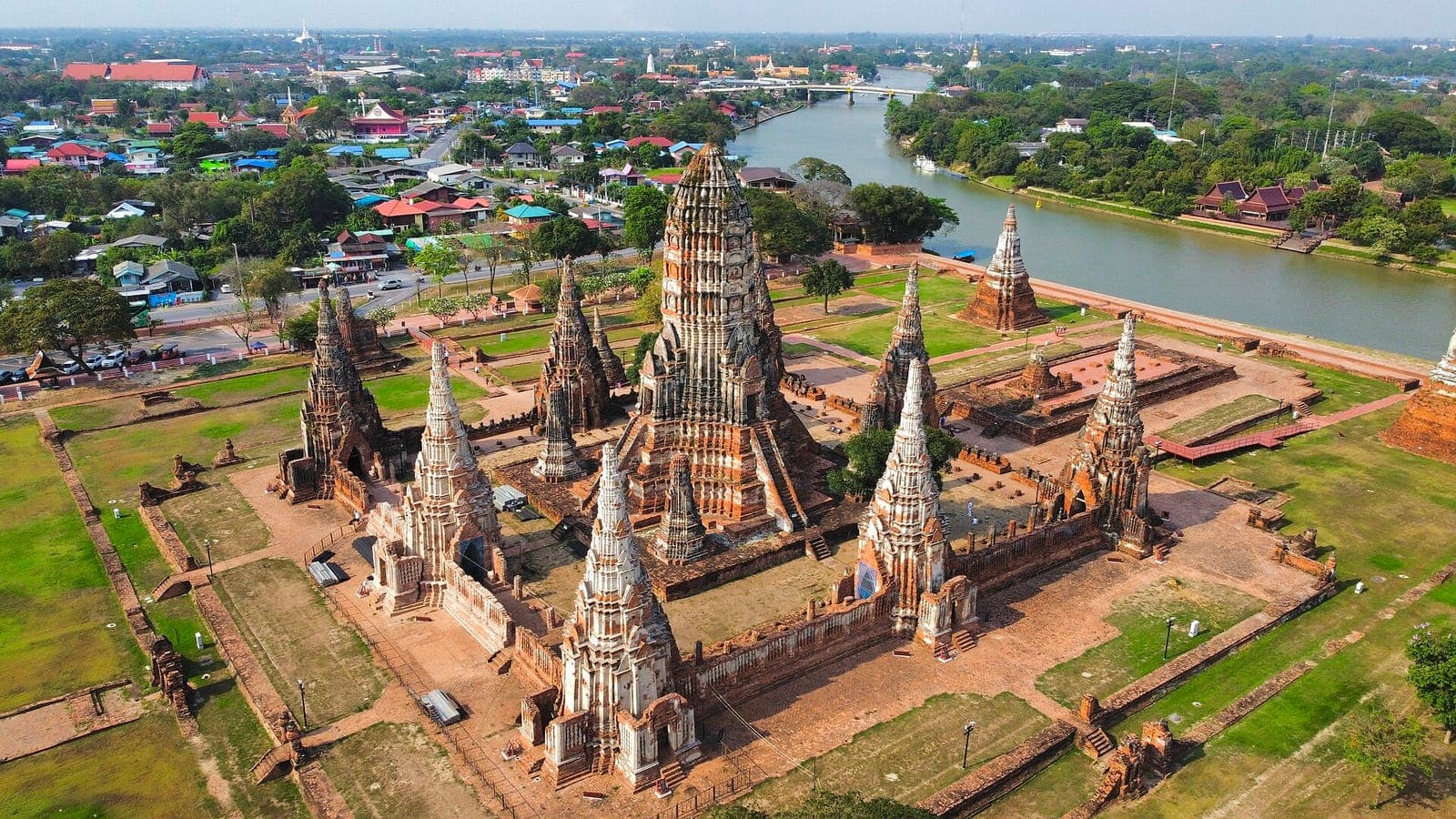
The former capital is about 80 km north, and its ruined temples are a strong contrast with Bangkok. The low-cost way is the train from Krung Thep Aphiwat Central Terminal (some services use Hua Lamphong), taking roughly 1.5 to 2 hours, with minivans from the Mo Chit area as an alternative. Hire a bicycle or a tuk-tuk at Ayutthaya station to loop the main sites (Wat Mahathat, Wat Phra Si Sanphet, Wat Chaiwatthanaram); each charges a small entry fee, usually around 50 THB. Timetables and the pros and cons of each mode are in our Bangkok to Ayutthaya guide.
If you would rather not organise it, guided day tours on Klook and GetYourGuide typically run 09:00 to about 18:00 with transport, a guide and lunch; some include a boat ride or heritage train leg. Prices run from around 1,000 THB for a join-in minibus to several thousand for a private car.
Pros
- Independent by train is cheap and flexible
- Tours remove the logistics and include a guide
- Sites are compact enough for one day
Cons
- Early start and a long, hot day
- Train timetables need checking the day before
- Tours have fixed stops and little free time
Option C: floating market and railway market tour
Damnoen Saduak Floating Market and the Maeklong Railway Market are 70 to 90 km south-west of Bangkok and awkward to combine by public transport, so most visitors book a tour. Typical tours leave at 07:00 to 10:00 from a Siam-area meeting point or your hotel, include a long-tail boat ride at Damnoen Saduak, and time the Maeklong stop so you see a train pass through the market before returning early to mid-afternoon. Join-in tours on Klook cost from a few hundred to around 1,500 THB; private versions cost more, and some add Amphawa's evening market and a firefly boat trip. Both markets are busiest by late morning, which is why the early departures are worth taking.
Where to base yourself
The most convenient bases for this itinerary are Silom/Sathorn (BTS, MRT and the Sathorn boat pier within walking distance) and Siam or lower Sukhumvit (on the BTS, with MRT interchanges at Asok and Sala Daeng). The Riverside and Old City are atmospheric and ideal for Day 1, but you will depend on boats and taxis to reach the Skytrain on Day 2; Khao San and Banglamphu suit low budgets with the same caveat. Our where to stay in Bangkok guide compares each area, and the Bangkok destination guide covers the city more broadly.
Approximate budget (THB per person per day)
These bands include accommodation (half a double room), food, local transport and entry fees. Day 1 alone costs about 1,000 THB in temple tickets, so it is the most expensive day for everyone.
| Band | Per day | What it looks like |
|---|---|---|
| Budget | 1,200 to 2,000 | Hostel dorm or simple guesthouse, street food and food courts, BTS/MRT/boats, no tours |
| Mid-range | 2,500 to 5,000 | Three-star hotel near a BTS station, mix of restaurants and street food, a massage, one join-in tour or Ayutthaya by train |
| Comfortable | 6,000 and up | Four- or five-star hotel, rooftop bar evening, private driver or private tour on Day 3, Grab taxis instead of boats when it is hot |
Carry cash for ferries, market stalls and temple tickets; cards are widely accepted in malls and hotels.
Where to check and book
Links marked “partner link” go to 12Go, which may pay Thai Route Guide a commission if you book there. The price is the same for you. Other links are plain links.
FAQ
Is three days enough for Bangkok?
For the main sights, yes. A fourth day adds breathing room for Chinatown by day, a cooking class or a second market. If you have a week, see our 7-day Thailand itinerary.
Should I use taxis instead of public transport?
Grab and Bolt ride-hailing are inexpensive by Western standards, but traffic is unpredictable and a 5 km ride can take an hour at rush hour. Use rail and boats for the itinerary above and save taxis for late nights and luggage days.
Sources and when we checked
We checked the following sources when writing this guide. Timetables, prices and rules change; confirm with the operator before you travel.
- The Grand Palace – Practical information ↗ (opens in a new tab)(checked 29 October 2026)
- The Grand Palace – FAQ (tickets, online booking, audio guide) ↗ (opens in a new tab)(checked 29 October 2026)
- Wat Pho – Plan your visit (hours, fees, massage prices) ↗ (opens in a new tab)(checked 29 October 2026)
- Jim Thompson House Museum – Visit ↗ (opens in a new tab)(checked 29 October 2026)
- Chao Phraya Express Boat – Lines and fares ↗ (opens in a new tab)(checked 29 October 2026)
- Chao Phraya Tourist Boat – Hop On Hop Off ↗ (opens in a new tab)(checked 29 October 2026)
- MRT (BEM) – Fare calculation and first/last train times ↗ (opens in a new tab)(checked 29 October 2026)
- MRT (BEM) – EMV contactless payment ↗ (opens in a new tab)(checked 29 October 2026)
- Chatuchak Market – Opening times ↗ (opens in a new tab)(checked 29 October 2026)
Thai Route Guide is an independent information site operated by IMPADX. We do not sell tickets, accommodation or tours. Links go to the operator or a third-party platform; bookings are made with them under their terms.
Related guides
View all →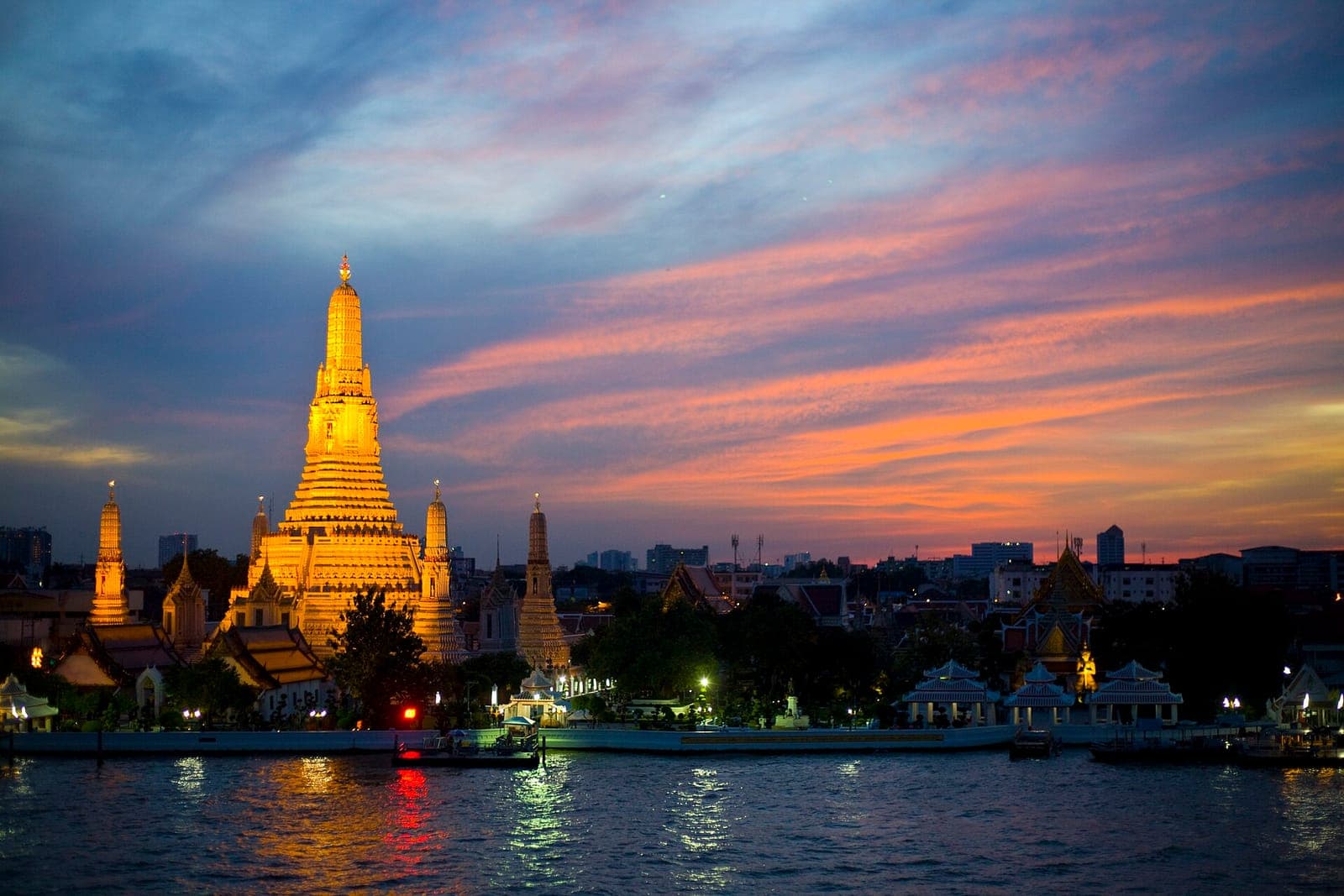
Destinations
Bangkok travel guide: getting there, getting around and what to see
Practical Bangkok guide for first-time and repeat visitors: both airports, BTS, MRT, boats and taxis, main sights, where to stay and what to check before going.
Updated 29 October 2026
Where to Stay
Where to stay in Bangkok: a neighbourhood guide
Compare Sukhumvit, Siam, Silom, the Riverside, the Old City, Chinatown, Ari and the airport zones to pick the right Bangkok base for your budget and plans.
Updated 29 October 2026
Transport
Bangkok to Ayutthaya: train, minivan, taxi or tour?
Compare trains from Krung Thep Aphiwat and Hua Lamphong, minivans from Mo Chit, Grab, day tours and river cruises to Ayutthaya, plus getting around the ruins.
Updated 29 October 2026
Transport
Suvarnabhumi Airport to Bangkok: rail link, taxi, bus or transfer?
How to get from Suvarnabhumi Airport into Bangkok: Airport Rail Link, the taxi queue, Grab and Bolt, the S1 bus, limousines and transfers, with costs by area.
Updated 29 October 2026